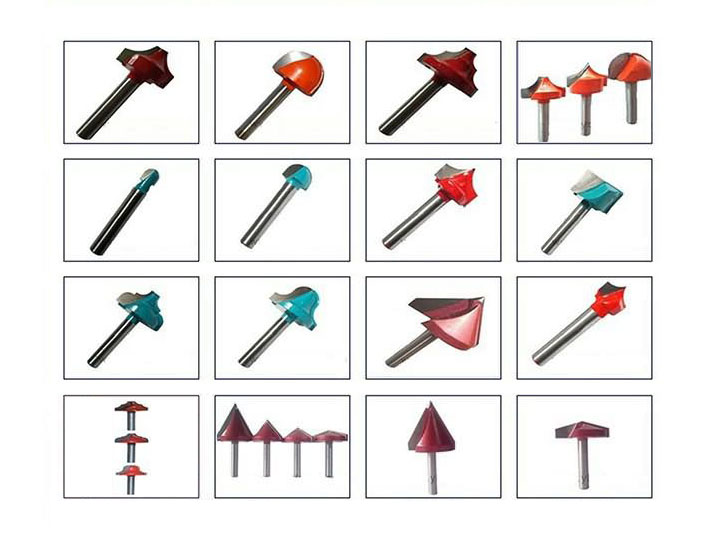
Different CNC cutting cutters deliver distinct performance when working on different raw materials and manufacturing projects. How can operators select suitable cutting tools matching their processing demands? This comprehensive handbook sorts out 15 mainstream milling bits widely adopted in CNC routing industries.
Full Handbook Covering CNC Router Cutters and Milling Bits
Basic Definition: What Are CNC Router Cutters & Milling Bits?
Milling bits act as the core cutting components fitted on CNC router equipment. Manufactured to cut, shape and carve diverse raw materials with ultra-high precision, these cutters feature varied outlines, dimensional specifications and base materials to fit multiple processing scenarios, covering timber, metal, plastic, stone and more workpiece types.
The main raw materials for crafting milling bits include high-speed steel and solid carbide. Carbide-made cutters boast superior wear resistance and are tailored for hard raw materials, while high-speed steel cutters come with lower cost and fit soft material processing. Every single cutter model carries exclusive processing functions, ranging from fine engraving, edge profiling to full penetration cutting of workpieces.
Selecting matched CNC cutting tools is the prerequisite for flawless finished products. Different processing tasks demand corresponding cutter types; mismatched cutters will not only lead to rough processing effects but also scratch or crack workpieces. Reasonable cutter selection boosts processing efficiency and prolongs the service life of cutting tools.
Core Classification of CNC Router Cutters & Milling Bits
Three mainstream base materials are used for manufacturing CNC router cutters: High-Speed Steel (HSS), Solid Carbide and Diamond Cutting Tools. Before introducing each cutter model, we will first explain the core structural parameters of CNC cutting tools.
- Flutes: Flutes refer to the spiral cutting grooves and blade edges on milling bits. This structure discharges debris generated during cutting. The flute quantity of a cutter directly determines its chip load capacity.
- Shank: The shank is the clamping section fixed inside the tool holder. It is the unprocessed smooth part of the cutter. Operators must keep shanks away from dirt, rust and surface scratches.
- Cutting Length: It refers to the effective cutting depth of the cutter, representing the maximum depth the bit can penetrate into raw materials.
- Cutting Diameter: This parameter stands for the width of the cutting slot formed by the cutter during machining.
Below we introduce all common CNC milling cutter models one by one:
3D Precision Engraving CNC Cutters
3D engraving cutters are professional milling bits specially developed for CNC equipment to carve complex three-dimensional patterns and curved surfaces on various raw materials. They feature outstanding concentricity and ultra-sharp blade edges, perfectly matching high-precision 3D relief carving work.
Edge Profiling CNC Milling Bits
Edge processing cutters are dedicated cutting tools to produce neat customized edges and contour lines on workpieces via CNC routers. They are the ideal option for processing high-density MDF boards and solid wood materials.
Double-Flute Straight Groove CNC Cutters
Double-edged straight groove cutters are used to mill precise straight grooves and slots on workpieces with CNC routers. They perform excellently in multilayer composite boards and plywood machining scenarios.
Round Bottom Arc CNC Cutters
Round-bottom cutters are general machining tools for CNC equipment. Their arc-shaped tip blades can process curved and sculpted surfaces and deliver ultra-smooth finished texture, suitable for delicate small relief carving tasks.
Double-Blade Spiral Chip-Removal Cutters
This cutter model is the preferred choice for MDF cutting and advertising mold blanking. Equipped with two large-capacity chip removal grooves and double cutting edges, it achieves balanced cutting performance with powerful debris evacuation capacity. When processing high-density MDF, it avoids black burn marks and smoke generation, and owns an extended service cycle.
Single-Blade Special Aluminum Cutting CNC Bits
Single-blade aluminum special cutters are designed for aluminum plate cutting. They feature anti-stick blade design, fast feeding speed and high overall machining efficiency.
Single & Double-Blade Up-Down Compression Cutters
Compression cutters with single or double blades are adopted for burr-free double-sided cutting of boards.
Single & Double Straight Flute Sharp Carving Cutters
Straight-flute sharp single/double blade cutters are dedicated to metal carving production.
Single-Blade Spiral CNC Milling Cutters
Single-blade spiral cutters are core woodworking cutting tools, widely applied in acrylic cutting.
During acrylic processing, this cutter produces zero smoke and odor, operates at high speed with high efficiency and prevents material debris from sticking on blades, complying with environmental production standards. Unique craft technology eliminates acrylic cracking, coarse grain and blade lines during cutting, delivering bright, smooth and flat finished surfaces.
Double & Triple-Blade Spiral CNC Cutters
If you need frosted matte texture on machined workpiece surfaces, double and triple-blade spiral cutters are your optimal pick.
Diamond Engraving Gravers
Diamond gravers are precision cutting tools for engraving, jewelry crafting and precision machining, perfectly suited for mirror acrylic engraving work.
Multi-Flute Rough Machining CNC Cutters
Multi-groove roughing cutters are specially designed for rough blank processing of particle boards.
Tungsten Steel CNC Milling Cutters
Tungsten steel milling cutters are the standard tool for metal mold milling and machining. Their surfaces are covered with wear-resistant violet-black titanium coating.
Single-Blade Spherical Ball End Cutters
Single-blade spiral ball end mills fit deep large-area relief carving on cork, density boards, natural lumber, PVC sheets and acrylic panels.
Slotting Grooving Cutters
Grooving cutters can create smooth workpiece surfaces without burrs or bulges after machining, and effectively prevent board deformation during cutting operations.
Final Summary
Above is the full detailed introduction of mainstream CNC milling bits. CNC cutting tools occupy an irreplaceable core position in modern manufacturing and precision machining industries, delivering unmatched processing accuracy, production efficiency and multi-scene adaptability. This handbook aims to solve most cutter selection puzzles for operators. Feel free to send us messages if you have any questions or confusion about CNC cutters.
Maintenance Guide for CNC Milling Bits to Maintain Stable Machining Performance
Scientific maintenance of CNC router bits is the key to consistent precise cutting and longer service life. Daily routine maintenance reduces tool wear and guarantees stable running of CNC equipment.
- Clean Tools Right After Every MachiningDust, wood chips and resin residue will adhere to cutter surfaces after cutting work.Use soft brushes or special cleaning agents to wipe cutters thoroughly, which retains blade sharpness and avoids overheating in subsequent machining.
- Regular Inspection for Wear and DamageCheck cutters frequently to spot dull blades, edge chipping and surface cracks in time.Worn cutters will reduce machining precision and scratch raw materials. Replace damaged cutters immediately to secure processing quality and operation safety.
- Standardized Storage ManagementStore all milling bits in dry classified storage boxes.Do not stack or drop cutters randomly to prevent blade damage. Proper storage extends tool service time and avoids accidental injuries.
Typical Errors to Avoid When Using CNC Router Cutters
Improper operation of CNC cutting tools will damage finished product quality and shorten machine service life. Learning these common mistakes helps operators reduce unnecessary production costs.
- Mismatch Cutters with Workpiece Raw MaterialsDifferent raw materials require matched dedicated cutters for ideal processing effects.Using wood cutters to process stone or metal will cause severe tool damage and defective finished goods. Always match cutter types with raw materials and processing purposes for high precision and efficiency.
- Excessive Machine LoadExcessively deep cutting depth or ultra-fast feed speed will dull cutter blades and overload machine motors.Stick to standard feed rates and avoid cutting depth exceeding the equipment’s rated processing capacity.
- Neglect Daily MaintenanceDirty or blunt cutters lead to uneven cutting surfaces and rapid overheating.Frequent cleaning and inspection are essential to maintain cutter performance and finished product quality.
Frequently Asked Questions (FAQs)
- What does CNC mean?CNC is the abbreviation of Computer Numerical Control.
- What is a CNC router machine?A CNC router is computer-driven automatic cutting equipment, used to cut timber, plastic, metal, foam and various composite materials.
- How many base material types are CNC router cutters made of?Three primary material types are adopted for commercial CNC router cutters.
- What are the three base materials for manufacturing CNC cutting tools?The three core materials are High-Speed Steel (HSS), Solid Carbide and Diamond Cutting Tools.