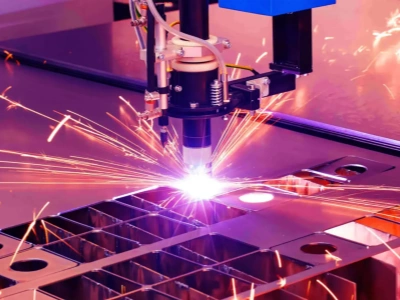
Purchasing your first CO2 laser engraving and cutting device requires sufficient product knowledge. Before investing in a CO2 laser machine for engraving and cutting applications, you need to fully understand its working principle, applicable materials, industry uses, price factors and practical purchasing skills to select cost-effective equipment that fits your budget.
Commonly named CO2 laser engravers, CO2 laser cutters or CO2 laser engraving and cutting machines, such equipment is widely used for non-metal processing. This complete buying guide aims to help new users make rational purchasing decisions and avoid low-quality equipment investment risks.
Choosing laser processing equipment demands careful consideration, as improper machine selection will hinder business development and cause unnecessary economic losses. This guide is compiled to achieve four core goals: improve users’ professional cognition of laser equipment selection, expose hidden design flaws and configurations concealed by suppliers, popularize professional laser processing knowledge among users, and teach buyers how to pick high-quality and durable CO2 laser machines.
Working Principle of CO2 Laser Machines
CO2 laser processing equipment generates stable laser beams through professional laser tubes. The laser beam is reflected by three optical mirrors and focused by a focusing lens, accurately targeting the surface of processed workpieces. With rapid thermal accumulation, the local material temperature rises sharply, achieving instant melting or gasification. The two-axis moving system controls laser trajectory to complete precise engraving, cutting and carving processing.
Applicable Processing Materials
CO2 laser machines are specialized in non-metal material processing, covering mainstream materials in the industry: Acrylic, MDF board, solid wood, PVC, color board, rubber, leather, cotton fabric, paper, plastic, ABS board and cardboard.
Application Industries
CO2 laser engraving and cutting equipment boasts versatile performance and is widely applied in seven major industries: printing and packaging, craft gift manufacturing, advertising production, leather and garment processing, model making, stone and tombstone carving, as well as studio personalized customization.
Core Components of CO2 Laser Machines
1. Optical System
The core precision component that determines processing quality, including laser tube, reflective mirror, focusing lens, aluminum fixing ring and red light positioning pointer.
2. Power & Transmission System
Includes laser power supply, switching power supply, stepping motor and driver, linear guide rail, belt transmission system (screw transmission optional) and synchronous wheel assembly, ensuring stable machine operation and accurate movement.
3. Control System
Equipped with Ruida RD6442S mainstream control system, fully compatible with mainstream design software such as CorelDraw, Photoshop, AutoCAD, Illustrator and InkScape for convenient file import and processing.
4. Working Table
Common configurations: lifting table (for thick material processing), knife strip table (for hard material engraving and cutting), honeycomb table (for soft materials such as leather and fabrics).
Special customized tables: spherical table, hydraulic lifting table and mountain-shaped special table for special processing scenarios.
5. Auxiliary Peripheral Equipment
- Cooling system: Simple water pump for entry-level machines; professional industrial water chiller for high-end equipment, providing constant-temperature cooling to stabilize laser tube operation.
- Exhaust fan: Quickly exhaust processing smoke and dust to keep the working environment clean.
- Air compressor & air pump: Real-time cooling for workpieces and optical lenses to prevent high-temperature damage.
Operating Mode of CO2 Laser Equipment
CO2 laser engraving machines operate similarly to desktop printers connected to computers. Users can design patterns and graphics through various graphic design software, set the processing size matching the workpiece, and send the design file to the laser device. The equipment will automatically complete precision engraving and cutting according to the set track.
Simply put, traditional printers print patterns on paper, while CO2 laser machines project high-precision laser beams to carve and cut customized patterns on various non-metal materials.
Step-by-Step Laser Image Production Process
- Scan physical pictures or import finished design images into the computer.
- Import images into design software such as CorelDraw and set the canvas size consistent with the workpiece dimension.
- Convert color images to grayscale; invert image colors for special materials such as anodized aluminum.
- Adjust laser processing speed and power parameters following official specifications, then send the processing task to the laser device.
- Select the task on the machine control panel and start processing with one click.
- Complete high-precision, durable laser engraving and cutting work.
Classification of CO2 Laser Machines
By Laser Power
Common commercial power configurations: 40W, 60W, 80W, 100W, 130W, 150W, matching different processing thicknesses and materials.
By Working Size
Standard working formats: 600400mm, 600900mm, 1300900mm, 13001800mm, 13002500mm, 14001000mm, 1600*1000mm. Custom non-standard sizes are available according to user production demands.
Budget-Friendly CO2 Laser Machine Purchasing Guide
The price of CO2 laser machines is determined by internal configuration rather than appearance. Machines with identical appearances may differ greatly in processing speed, stability and service life due to different core accessories and configurations. Buyers need to confirm seven key points before purchase:
- Confirm processing materials: CO2 laser machines are only suitable for non-metal processing; metal cutting requires dedicated fiber laser equipment.
- Select reasonable working size: Larger format does not mean better performance. Low-quality large-format machines have unstable laser output, resulting in uneven engraving color difference. Choose the size matching your product specifications.
- Match professional processing functions: For cylindrical workpieces such as cups, bottles, bamboo products and eggs, select equipment equipped with rotary attachments and mobile worktables. Special scenarios like fabric cutting, stone carving, sign engraving and label cutting require customized tables, rollers and scanning accessories.
- Select matching laser tube power: Pure engraving scenarios adapt to 40W–80W low power; mixed engraving and cutting requires medium and high power. Different power corresponds to different maximum cutting thicknesses of various materials.
Material Cutting Thickness Parameter Table (Max mm)
| Material | 40W | 60W | 80W | 100W | 130W | 150W |
|---|---|---|---|---|---|---|
| Acrylic | 3 | 8 | 12 | 15 | 20 | 30 |
| MDF | 2 | 4 | 7 | 9 | 13 | 20 |
| Wood | 3 | 5 | 8 | 10 | 15 | 20 |
| PVC | 2 | 4 | 7 | 9 | 13 | 18 |
| Color-board | 2 | 3 | 6 | 8 | 12 | 18 |
| Rubber | 2 | 4 | 7 | 8 | 9 | 10 |
| Leather | 1 | 4 | 8 | 10 | 13 | 15 |
| Cotton | 3 | 6 | 12 | 15 | 20 | 25 |
| Paper | 3 | 4 | 8 (30 sheets) | 10 | 12 | 15 |
| Plastic | 1 | 4 | 7 | 10 | 10 | 10 |
| ABS Board | 3 | 8 | 12 | 15 | 20 | 25 |
| Paper Board | 2 | 5 | 6 | 8 | 12 | 18 |
- Focus on after-sales service: High-quality machines have low failure rates and require little maintenance, while inferior equipment frequently malfunctions. Reliable after-sales support avoids production shutdown losses caused by unsolvable faults. It is essential to select manufacturers with good reputation and professional technical support.
- Inspect professional cooling system: The laser tube service life depends entirely on the cooling system. Low-cost plastic water tanks and ordinary aquarium pumps lead to unstable temperature and easy tube damage. Qualified machines are equipped with dedicated industrial chillers using ozone-friendly refrigerant for constant-temperature cooling. Meanwhile, the cooling circuit must be fitted with a water flow sensor to automatically power off and protect the laser tube from dry burning and damage. High-quality machines are also equipped with dust-proof and anti-pollution protection for the laser optical path to avoid power attenuation.
- Check optical system quality: Processing quality is determined by mirrors and focusing lenses. Low-cost ordinary lenses have poor coating, 20%–50% laser power loss, easy burning and light distortion, resulting in rough processing effects. High-end zinc selenide focusing lenses and high-reflection coated mirrors ensure high laser transmittance and stable processing precision.
Why Choose spiritore?
Premium Quality Control
spiritore adheres to original genuine accessories procurement, standardized assembly and strict factory testing. Every CO2 laser machine undergoes full performance debugging before delivery, with multi-process quality inspection to guarantee stable long-term operation.
Reasonable & Transparent Pricing
Many buyers blindly pursue ultra-low prices and finally purchase inferior unusable equipment. There is no profit loss in commercial transactions. spiritore formulates pricing based on equipment configuration and market standards, refusing shoddy products. We focus on long-term cooperation, and every cooperative customer gains satisfactory purchasing experience.
Professional After-Sales Support
spiritore owns a mature professional technical team with rich industry experience. We provide 24-hour online remote guidance to solve daily faults quickly. For complex equipment failures, engineers can provide on-site maintenance services to fully guarantee user production efficiency.