Woven from continuous carbon fiber filaments, carbon fiber fabric is divided into dry carbon fiber fabric and prepreg carbon fiber fabric. It is widely adopted in composite molding fields such as building structural reinforcement, new energy equipment shells, yachts and ships, aerospace models, and sports equipment. Carbon fiber filaments feature high brittleness and loose woven structure, making them extremely vulnerable to yarn dispersion, edge fraying and tow loosening during cutting. These defects directly undermine the quality of subsequent resin impregnation and lamination molding, which has long been a key processing challenge for composite material factories worldwide.
Common Pain Points of Traditional Carbon Fiber Fabric Cutting Processes
1. Die Stamping Cutting
Die cutting relies on instantaneous impact force to squeeze woven fabrics, causing severe displacement and slippage of surface fiber yarns and leaving massive loose filaments on cutting edges. In addition, custom dies require long production cycles. Frequent style changes of special-shaped workpieces require repeated die opening, resulting in high proofing costs and poor production flexibility, unable to adapt to customized composite production trends.
2. Manual Scissor Cutting
Manual cutting fails to guarantee precise cutting trajectories, especially for arcs and complex contours with large machining difficulties. It leads to poor batch consistency and extremely low production efficiency. Moreover, the cut fabric edges continue to loose threads after processing, requiring additional edge locking procedures and increasing secondary processing costs and production cycles.
3. Laser Thermal Cutting
Laser cutting adopts high-temperature thermal ablation to melt carbon fiber filaments, causing carbonization of surface resin and burnt edges. The high-temperature burning process releases harmful flue gas, failing to meet clean production standards. More importantly, extreme heat damages the inherent mechanical properties of carbon fibers, reducing the structural strength of finished composite products, so laser cutting is prohibited in many high-end composite manufacturing scenarios.
Core Advantages of CNC Vibration Knife Cutting Machine for Carbon Fiber Fabric Processing
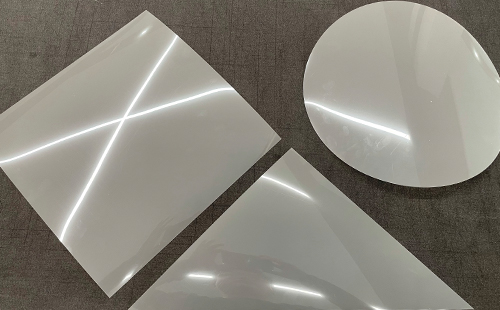
Adopting normal-temperature physical cutting technology, the vibration knife cutter completes cutting through high-frequency blade vibration without any thermal damage. It is perfectly compatible with all types of dry and prepreg carbon fiber fabrics, solving traditional processing defects from the source.
1. Constant-Speed Cutting, Effectively Restraining Yarn Slippage and Fraying
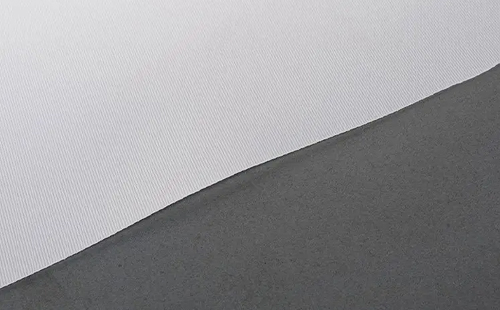
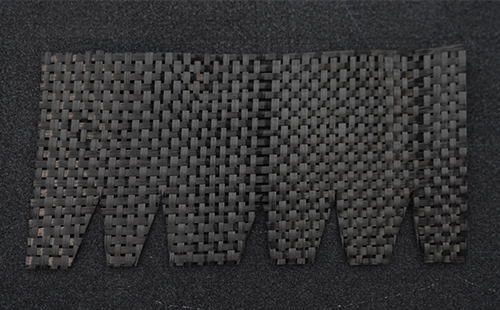
The blade traveling speed is stable and precisely controllable. The equipment separates fabric fibers gradually during cutting, reducing fiber stretching and displacement. It significantly improves frayed edges and loose thread problems, delivering neat and standard cutting contours with consistent fabric tension.
2. Cold Cutting Technology, Complete Protection of Carbon Fiber Mechanical Properties
The whole cutting process requires no high-temperature burning and will not damage fiber bodies and prepreg resin systems. The original tensile strength, toughness and structural stability of carbon fiber fabric are fully retained, fully meeting the strict production standards of high-end composite products.
3. Single-Layer Cutting Support, Adaptable to High-Precision Lamination Processes
Most carbon fiber products adopt a layer-by-layer lamination process. The equipment is equipped with a flat and stable working platform to ensure stable dimensional accuracy for single-layer fabric cutting. The built-in intelligent nesting software optimizes the layout reasonably, effectively reducing waste of high-cost carbon fiber raw materials and improving economic benefits.
4. Fast Drawing Import, Flexible Custom Order Processing
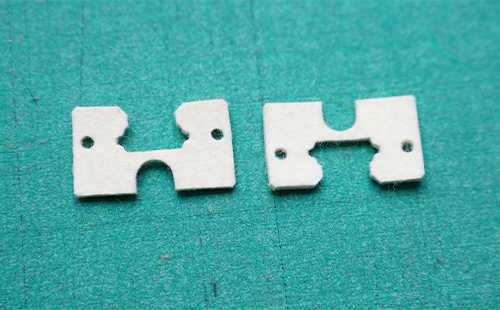
The machine is compatible with mainstream drawing formats including DXF, CAD and PLT. Special-shaped contours, hollow holes and arc-shaped blanks can generate cutting paths in one click without die opening. It flexibly adapts to full-scenario production from small-batch proofing to large-scale mass production, greatly shortening product delivery cycles.
Exclusive Optimization Features of Source Manufacturer Carbon Fiber Cutting Equipment
With years of R&D experience in composite material cutting equipment, we have launched targeted exclusive optimizations for the characteristics of carbon fiber fabrics, such as easy fraying and high raw material cost:
1. Fabric-Specific Precision Negative Pressure Control System
Equipped with multi-area independent pressure-adjustable adsorption function, the suction force is gentle and uniform. It firmly fixes ultra-thin carbon fabric to prevent material displacement during cutting, while avoiding woven texture deformation caused by excessive negative pressure stretching, ensuring intact fabric structure after cutting.
2. Custom Composite Tool Combination Solution
Matched with optimized oblique carbide vibrating blades for cleaner fiber severance. Two sets of mature parameter schemes for blade speed and cutting pressure are preset respectively for dry carbon fabric and prepreg carbon fabric, realizing targeted cutting for different composite materials and ensuring stable and excellent edge quality.
3. High-Precision Intelligent Nesting System
Built-in professional composite nesting algorithms minimize the gap between cut pieces. Given the high cost of carbon fiber raw materials, optimized layout greatly reduces material loss, effectively controls production costs, and improves material utilization rate and factory profit margins.
4. One-Stop Technical Service for Composite Industry
Free sample cutting service is available for both dry carbon fabric and prepreg materials to customize exclusive cutting processes. We provide on-site equipment installation and commissioning as well as systematic operator training. Remote parameter optimization support is continuously provided for newly introduced composite materials in later production to ensure long-term stable equipment operation.
Conclusion
Carbon fiber fabric features high raw material cost and strict requirements for cutting edge quality. Traditional cutting processes cannot balance precision, finished product quality and material utilization simultaneously. The CNC vibration knife cold cutting solution effectively solves industry pain points such as carbon fabric fraying, burrs and fiber performance damage. With mold-free flexible production and high-precision fray-free cutting capabilities, it perfectly adapts to the multi-style and customized processing needs of the composite material industry, becoming the preferred blanking solution for carbon fiber fabric processing.