Material Characteristics & Manufacturing Process of Collagen Freeze-Dried Sponge
Collagen freeze-dried sponge is a pure natural biomedical material prepared with type I collagen as the core raw material through low-temperature freeze-drying molding. The complete manufacturing process includes extracting high-purity collagen from animal tissues such as bovine Achilles tendons via acid-enzyme combined purification, preparing homogeneous collagen solution, performing ultra-low-temperature rapid solidification to fix the three-dimensional structure, and finally vacuum sublimating moisture to form a fluffy and interconnected porous sponge structure.
The advanced low-temperature enzymatic hydrolysis and freeze-drying process perfectly retains the complete triple helix structure of natural collagen and stable biological activity. The finished sponge features uniform pores, soft texture, strong water absorption and safe degradability. These unique biomedical characteristics determine that collagen freeze-dried sponge cannot bear extrusion, stretching and high-temperature thermal impact during cutting, putting forward extremely strict requirements for processing equipment and technology.
Core Processing Pain Points of Traditional Collagen Sponge Cutting
The soft porous structure of collagen freeze-dried sponge makes it extremely sensitive to mechanical extrusion and high temperature. Traditional processing methods have insurmountable technical defects, mainly reflected in three major problems:
1. Uncontrollable Precision & Severe Deformation Rebound
Collagen sponge has loose internal structure and ultra-soft texture. When traditional cutting tools contact the material, instantaneous extrusion force will compress and collapse the porous structure, causing material displacement and contour distortion. Different from ordinary flexible materials, collagen sponge has an obvious rebound effect: the compressed material rebounds after the tool leaves, resulting in inconsistent cutting dimensions between processing and finished products, which cannot meet the dimensional tolerance standards of medical grade products.
2. Frequent Chipping, Burrs and Fiber Tearing
Improper traditional cutting methods convert precise cutting into violent pulling and tearing of sponge fibers. It is easy to cause edge chipping, surface burrs and integral fiber drawing of collagen sponge. For high-purity biomedical sponges that rely on complete structural integrity to exert hemostatic and repair functions, local structural damage will directly lead to product scrapping, resulting in extremely high production loss.
3. Dust Pollution & Hidden Safety Hazards
Traditional mechanical cutting produces a large number of tiny sponge debris and floating dust. The fine dust adheres to tool surfaces to affect subsequent cutting accuracy, and invades equipment guide rails and screw rods to accelerate component wear and reduce equipment stability. In terms of production safety, long-term inhalation of biomedical sponge dust endangers workers' respiratory health, and excessive dust concentration also brings potential dust explosion risks to the workshop.
Fatal Defects of Thermal Cutting for Biomedical Sponge
Many manufacturers try thermal cutting processes such as laser cutting and hot knife cutting to process sponge materials, but this technology is completely unsuitable for collagen freeze-dried sponge. Collagen has an extremely low thermal denaturation temperature, and any high-temperature thermal impact will destroy the unique triple helix molecular structure and intrinsic biological activity of collagen.
Thermal cutting will cause edge carbonization, yellowing, scorching and peculiar odor of collagen sponge. These thermal damages not only damage the appearance of finished products, but fundamentally destroy the hemostatic, water-absorbing and tissue repair functions of biomedical sponges, making the products completely lose medical application value. Therefore, thermal cutting technology has been completely eliminated in formal medical-grade collagen sponge processing.
Working Principle & Core Technical Parameters of Oscillating Knife Cutting
Working Principle
The
CNC oscillating knife cutting machine adopts high-frequency pulse impact cold cutting principle. The blade vibrates vertically at an ultra-high frequency of thousands to tens of thousands of times per minute, instantly overcoming the shear strength of porous sponge materials through intermittent micro-impact cutting. It avoids continuous extrusion and stretching of traditional cutting, effectively preventing structural collapse and rebound deformation of collagen sponge. Equipped with an intelligent zoned vacuum adsorption platform, the equipment fixes the ultra-soft material stably through negative pressure, completely eliminating material displacement and ensuring full-process cutting stability.
Key Professional Technical Parameters
Professional medical-grade sponge cutting equipment has ultra-precise and stable performance parameters to meet medical production standards:
- Ultra-high cutting accuracy: overall running accuracy ±0.05mm, repeated positioning accuracy ±0.01mm, finished product dimensional error controlled within ±0.02mm
- High-efficiency cutting performance: maximum blade vibration speed 16000rpm, cutting speed up to 1300mm/s
- Adaptive processing range: equipped with Z-axis pressure adaptive system, suitable for 0.5mm-150mm thick porous sponge materials
- Medical-grade processing configuration: full machine anti-static design, adjustable constant negative pressure adsorption, support pre-cut dehumidification and static elimination treatment
5 Core Advantages of Oscillating Knife for Collagen Freeze-Dried Sponge Cutting
1. Pure Cold Cutting, Zero Thermal Damage & Complete Bioactivity Preservation
Different from thermal cutting, the oscillating knife relies on pure mechanical high-frequency vibration cutting without any high-temperature heat generation. There is no thermal affected zone in the whole process, completely avoiding collagen denaturation, edge carbonization and yellowing. It perfectly preserves the complete molecular structure and medical biological activity of collagen sponge, which is the core guarantee for qualified medical-grade finished products.
2. Ultra-High Precision Cutting, Smooth & Flawless Notches
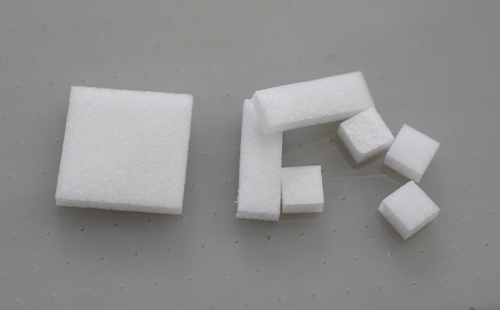
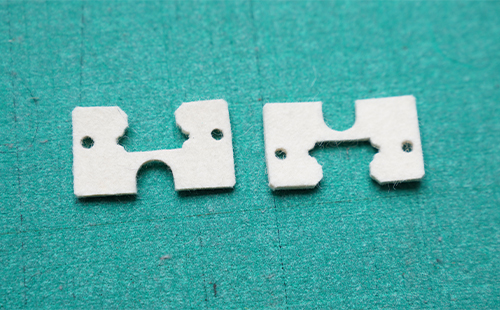
The high-stability CNC system accurately controls the blade running track and cutting pressure. The high-frequency vibration shear cutting mode replaces traditional tearing cutting, realizing zero burr, zero chipping and zero fiber drawing cutting effect. The flat and smooth cutting surface ensures the structural integrity of the porous sponge, greatly improving the finished product yield rate.
3. Intelligent Nesting, Ultra-High Material Utilization
Matched with professional medical material nesting software, the equipment automatically optimizes the cutting path and layout. The material utilization rate of high-value collagen freeze-dried sponge is increased to more than 95%, effectively reducing the waste of expensive biomedical raw materials and optimizing enterprise production costs.
4. Fully Automatic Intelligent Processing, Improve Production Efficiency
Integrated with automatic feeding, intelligent identification, vacuum fixing and continuous cutting systems, the equipment realizes unattended automatic production. It eliminates inefficient manual scribing, positioning and cutting processes, greatly shortening the production cycle. The standardized digital processing mode fully meets the strict quality traceability and standardized management requirements of Class III medical device production.
5. Dust-Free & Eco-Friendly, Safe Workshop Production
The whole mechanical cold cutting process produces no floating dust, debris, peculiar smell or harmful gas. It completely solves the dust pollution and safety hazards of traditional processing, protects the occupational health of workshop workers, and meets the dust-free and sterile production environmental standards of medical consumable factories.
Core Application Value in Biomedical Sponge Processing
Fundamental Upgrade of Processing Quality
The oscillating knife cutting machine achieves three major technological breakthroughs in collagen freeze-dried sponge processing. First, the Z-axis pressure adaptive system intelligently adjusts the cutting pressure to avoid over-compression and collapse of the sponge porous structure. Second, the stable vacuum negative pressure platform (negative pressure ≥12KPa) fixes the material evenly without damaging the internal network structure. Third, the pre-cut dehumidification and static elimination treatment and full anti-static design completely retain the original physical properties and biological activity of the collagen sponge, realizing zero-defect processing of medical materials.
Dual Improvement of Production Efficiency & Cost Control
The automated continuous batch cutting capability completely gets rid of the limitations of manual processing. The stable digital production mode ensures consistent product quality and stable output capacity. For medical consumable enterprises, oscillating knife cutting technology not only improves production efficiency and yield rate, but also realizes refined cost control, helping enterprises pass strict medical production audits and enhance market competitiveness.
Industry Application & Market Feedback
At present, CNC oscillating knife cutting equipment has been widely used in the precision processing of various porous flexible materials such as polyurethane sponge, EVA foam and rubber cotton. It has become the standard core equipment for high-value biomedical material production. More and more global medical consumable manufacturers have adopted oscillating knife cutting machines for mass production of collagen freeze-dried sponge, hemostatic cotton and biological membrane materials.
With the continuous expansion of the global medical wound care and tissue engineering market, the demand for high-precision and stable processing of collagen biomedical sponges is increasing. Oscillating knife cutting equipment has become a strategic core asset for medical material enterprises to achieve quality upgrading and capacity expansion.
Professional Selection Guide for Collagen Freeze-Dried Sponge Cutter
To purchase professional medical-grade collagen sponge oscillating knife cutting equipment, enterprises need to focus on three core configurations:
1. High-Frequency Vibration Blade & Z-Axis Adaptive Pressure System
High-frequency vibration ensures efficient and smooth cutting of porous fibers, while the Z-axis adaptive pressure technology realizes "soft landing" cutting for ultra-soft sponge materials. It effectively avoids structural collapse and edge damage caused by excessive pressure, which is the basic guarantee for flawless cutting of collagen sponge.
2. Constant Vacuum Zoned Adsorption Platform
Medical-grade sponge processing requires stable and adjustable negative pressure adsorption. The high-tightness vacuum platform can evenly fix ultra-soft materials without displacement or structural damage. Reasonable adjustable negative pressure avoids material deformation caused by excessive suction and position deviation caused by insufficient suction, ensuring full-process precise positioning.
3. High-Precision CNC System & Intelligent Nesting Software
Mature industrial-grade CNC control system reduces operation threshold and supports one-click reading of medical-grade design drawings. The intelligent nesting function optimizes the layout of high-value collagen materials, minimizes raw material waste, and meets the long-term stable and high-efficiency production needs of medical enterprises.
Conclusion
Collagen freeze-dried sponge belongs to high-standard and high-value biomedical materials, and its processing quality directly determines the safety and service performance of terminal medical products. Traditional manual and thermal cutting processes can no longer meet modern medical production standards.
With the comprehensive advantages of zero thermal damage, ultra-high precision, dust-free environmental protection, intelligent automation and high material utilization rate, CNC oscillating knife cold cutting technology has become an irreplaceable processing solution in the field of collagen freeze-dried sponge precision cutting. Introducing professional oscillating knife cutting equipment is not only an effective way for medical material enterprises to solve processing pain points, but also a key strategic investment to realize intelligent upgrading of production, stable quality control and market competitiveness improvement.