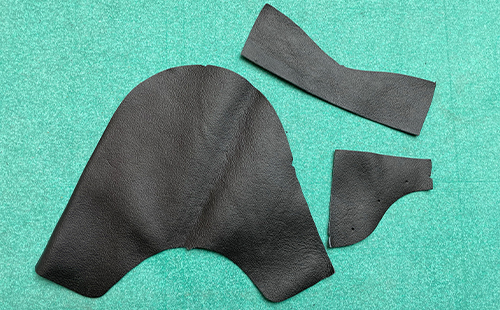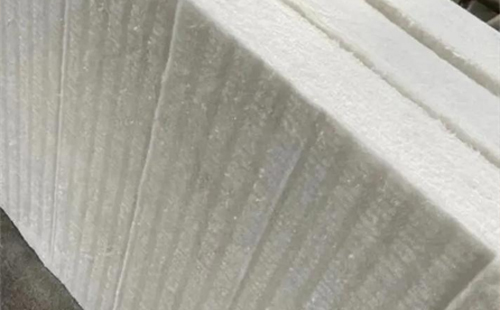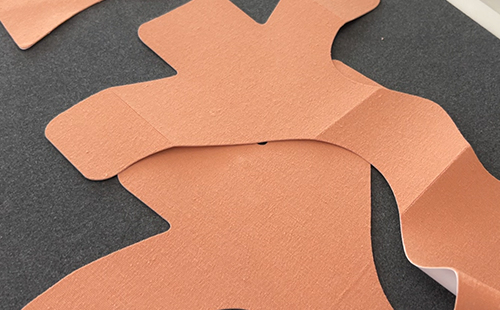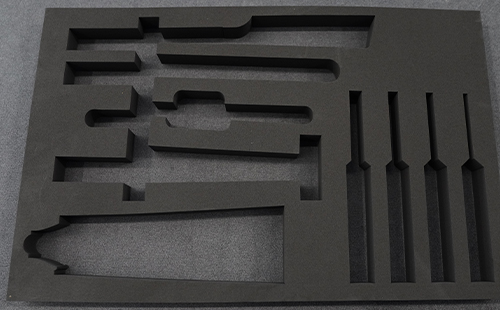
EVA foam, a flexible cushioning material made of ethylene-vinyl acetate copolymer foaming, features a uniform closed-cell structure, lightweight texture, excellent elasticity, shockproof and moisture-proof performance, and easy forming processing. Classified into ordinary EVA, anti-static EVA, flame-retardant EVA, high-elastic EVA and other types, it is widely used in electronic instrument packaging liners, toolbox shockproof slots, shoe midsole materials, automotive interior cushions, cosmetic gift boxes, sports protective gear and other industries.
As a thermoplastic foamed material, EVA foam is extremely sensitive to processing temperature and cutting pressure. High-temperature processing will cause melted sticky edges and hardened foam holes; excessive cutting pressure will lead to permanent depression of the foamed layer and loss of resilience. Traditional processing technologies have prominent drawbacks in manufacturing special-shaped liners and stepped groove structures, including high mold opening costs, obvious finished product indentations and rough edges, which can no longer adapt to the current small-batch and customized packaging processing trend. The CNC oscillating vibration knife cold cutting machine adopts physical high-frequency cutting technology with controllable cutting depth and force, perfectly solving common EVA processing pain points such as tool sticking, pressing marks and difficult special-shaped cutting, becoming the mainstream automatic blanking equipment for packaging and shoe material industries.
Core Pain Points of Traditional EVA Foam Cutting Processes
Due to the soft texture, low melting point and delayed resilience of EVA foam, all traditional cutting methods have inherent adaptation defects, restricting product quality and production flexibility:
1. Die Stamping: Irreversible Indentation & High Custom Mold Cost
Die stamping separates materials through high-pressure punching. The strong pressure compacts the internal closed-cell structure of EVA foam, leaving permanent indentations on cutting edges and reducing the cushioning resilience, which directly undermines the shockproof effect of packaging liners. For special-shaped packaging liners with grooves and stepped structures, customized multi-layer combined dies are required, featuring long production cycles and high costs. The poor flexibility of style adjustment makes it impossible to undertake small-batch customized orders efficiently.
2. Manual Cutting: Low Precision & Low Efficiency for Thick Materials
Manual blanking with utility knives and scissors relies entirely on worker proficiency. It is difficult to guarantee high precision for special-shaped contours and hollow holes, resulting in poor consistency of batch products. When processing thick EVA sheets, layered cutting is required, which easily causes inclined sections, dimensional displacement and rough crumbly edges. Secondary manual trimming and polishing are indispensable, leading to extremely low overall production efficiency.
3. Laser Cutting: Thermal Sticky Edges & High Environmental Risks
Laser cutting is a high-temperature thermal processing technology. EVA foam melts rapidly under high heat, forming hardened shells, sticky edges, yellowing and shrinkage holes on cutting surfaces, destroying the original soft texture and elasticity of the foam. Meanwhile, the burning process produces pungent flue gas and volatile substances, failing to meet the environmental protection standards for food-grade and electronic-grade packaging. Thick EVA materials are also prone to section carbonization and residual backside slag after laser cutting.
4. Rotary Knife Cutting: Extrusion Deformation & Only Straight Cutting Available
Rotary disc knives separate foam materials by extrusion and tearing. The material is depressed and deformed under force during cutting, resulting in large dimensional deviation after rebound and rough crumbly edges. In addition, this equipment can only complete simple linear slitting, unable to process special-shaped structures, grooves and hollow designs, which severely limits product categories and cannot meet customized liner processing requirements.
Core Advantages of EVA Foam CNC Vibration Knife Cutting Machine
Targeting the thermoplasticity and high resilience characteristics of EVA foamed materials, our vibration knife cutting machine optimizes the knife head vibration mode and cutting control logic, realizing stable processing of EVA sheets and rolls with different densities and thicknesses.
1. Normal Temperature Physical Cold Cutting, No Thermal Sticking & Complete Cushioning Performance
The equipment completes cutting through high-frequency small-amplitude blade vibration without high-temperature heating. It will not melt the EVA foam hole structure, ensuring no hardening, sticking, yellowing or blackening on cutting edges. The original resilience and shockproof cushioning performance of the material are fully retained. The finished products are odor-free and compliant with environmental quality standards for electronic and food packaging.
2. Low-Pressure Floating Cutting, No Permanent Indentation & Vertical Smooth Sections
Equipped with a floating knife head and lightweight high-frequency cutting mode, the extrusion force on materials is precisely controllable during operation. The foamed layer will not be over-compacted, and the material rebounds naturally after cutting without irreversible indentations. The cutting section is flat and vertical with smooth side walls, enabling a tighter fit between packaging liners and products without secondary manual polishing and trimming.
3. Precise Depth Control, One-Piece Forming for Complex Liners
The machine supports full cutting, half cutting, dotted line cutting and stepped cutting with a cutting depth accuracy of 0.1mm. All kinds of packaging liners with grooves, holes and multi-layer steps can be integrally formed in one typesetting and cutting process without block splicing, greatly improving the processing efficiency and integrity of complex special-shaped liners.
4. Intelligent Nesting & Common-Edge Cutting, Reducing Raw Material Loss
Built-in professional foam typesetting system supports common-edge cutting and compact nesting, and automatically avoids material defects. Compared with manual typesetting, the material utilization rate is improved by more than 15%. Given the high raw material cost of EVA foam, intelligent nesting effectively reduces production loss and creates considerable profit margins, especially suitable for large-batch packaging liner orders.
5. Dust-Free & Low-Noise Operation, Suitable for Clean Production Workshops
Physical cutting produces no smoke or irritating waste gas. A small amount of foam debris can be centrally collected by the matching dust removal device, keeping the workshop clean and tidy. No additional large-scale waste gas treatment equipment is required, easily meeting environmental inspection and clean production requirements.
Customized Advantages of Professional EVA Cutting Equipment from Source Manufacturer
Focusing on cushioning material cutting technology for years, we have launched exclusive functional optimizations for EVA liner processing, different from general-purpose cutting equipment:
First, exclusive process template library for packaging liners. Pre-set mature cutting parameter templates for toolboxes, electronic gift boxes, cosmetic boxes and other common liners, covering knife frequency, cutting speed and depth schemes for EVA materials of different densities and thicknesses. It supports combined processes of half cutting, full cutting and creasing, reducing trial and error costs for new orders.
Second, high-precision layered depth control system. Equipped with professional depth control modules for stepped and grooved special-shaped liners, multi-layer depth processing can be completed in one cutting pass without repeated tool height adjustment, increasing the processing efficiency of complex liners by more than 40% with stable and consistent groove depth.
Third, optional automatic coil linkage production scheme. Customizable automatic unwinding and platform feeding linkage structure realizes uninterrupted continuous cutting of EVA coils, reducing manual material handling and loading/unloading time. The single-shift production capacity is increased by more than 30%, fully meeting the mass production needs of large-scale packaging factories.
Fourth, industry-exclusive after-sales guarantee. We provide 7×12-hour technical response for peak order seasons, with remote rapid troubleshooting for common faults and nearby warehouse delivery of consumables and accessories. Free lifelong process upgrade guidance and remote parameter debugging for new materials and processes ensure long-term stable equipment operation.
Conclusion
The core difficulties of EVA foam processing lie in avoiding thermal tool sticking, preventing resilience failure caused by indentations, and realizing integrated forming of complex special-shaped structures. Traditional die stamping, manual cutting and laser cutting either damage material performance or feature high production costs and poor flexibility, failing to keep up with the customized and multi-variety small-batch processing trend.
The CNC vibration knife cold cutting machine solves all EVA processing pain points in one stop with the advantages of normal-temperature cutting, traceless processing, precise depth control and mold-free flexible production. It can efficiently produce standard blanks and quickly deliver complex special-shaped liners, making it the preferred automatic blanking solution for EVA processing in packaging, shoe material and automotive interior industries.
If you have EVA foam and packaging liner cutting demands, welcome to contact us for free sample testing and customized cutting solutions and equipment quotations.