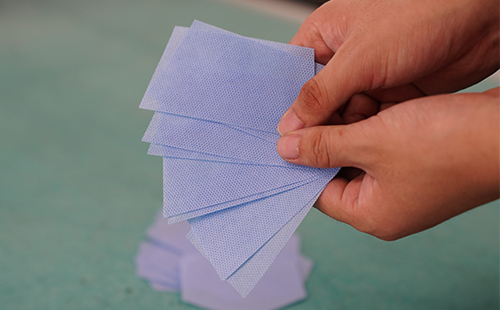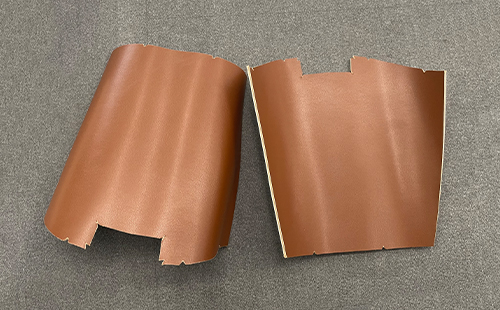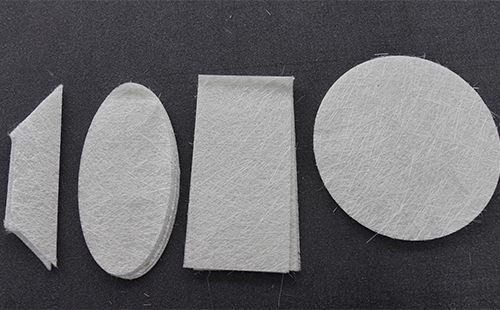
Glass fiber mat is a vital non-metallic reinforcing material widely used in FRP products, wind turbine blades, ship hulls, chemical anti-corrosion pipelines, new energy vehicle parts and electronic insulation panels. It is mainly divided into chopped strand mat, surface mat and wet-laid thin mat, with excellent properties of insulation, corrosion resistance, good resin permeability and uniform strength. However, due to its loose fiber layout and weak internal bonding force, glass fiber mat is prone to typical processing defects including loose fibers, edge fuzzing, flying wires and delamination during cutting. In addition, floating fiberglass dust may irritate human skin and respiratory tract, putting forward high requirements for cutting technology and dust control of processing equipment.
Traditional cutting methods cannot adapt to the structural characteristics of glass fiber mat, resulting in poor cutting quality and low production efficiency, which greatly affects the performance of finished composite products. The following is a detailed analysis of the drawbacks of conventional cutting processes and professional solutions to eliminate flying wires and delamination.
Defects of Traditional Glass Fiber Mat Cutting Processes
Each traditional cutting method has obvious limitations, which will damage the original structure of glass fiber mat and cause persistent flying wire and delamination problems:
1. Manual Scissor Cutting
Manual cutting relies on external pulling force to separate materials, which directly causes loose fibers and large-area fuzzing on the cutting edge. The cut surface is uneven with massive floating fiberglass wires. This method has low positioning accuracy, cannot process special-shaped structures such as arcs and hollows, and only supports simple straight cutting. The consistency of batch production is poor. Moreover, the free fiberglass dust generated during processing pollutes the workshop environment and endangers the physical health of operators.
2. Laser Thermal Cutting
Laser cutting belongs to high-temperature thermal processing. The intense heat will burn and damage the internal adhesive of the glass fiber mat, leading to hardening, embrittlement and yellowing of the cutting edge. The failure of edge bonding will cause severe delamination and bubble generation during subsequent resin infiltration, greatly reducing the mechanical strength and service life of FRP finished products. Meanwhile, high-temperature melting of adhesives will produce irritating harmful flue gas, failing to meet modern factory environmental protection production standards.
3. Disc Roller Cutting
Disc and roller cutters separate materials by extrusion and tearing force. For loosely structured glass fiber mat, the extrusion and stretching during cutting will easily peel off surface fibers and cause delamination. For thick glass fiber mats, incomplete cutting and intermittent notch defects often occur, requiring manual trimming of burrs in the later stage, which increases additional processing procedures and production costs with high material loss rate.
4. Die Cutting and Stamping
Die cutting relies on strong pressure to punch materials. The huge instantaneous pressure will compress the internal pores of the glass fiber mat, destroy the original loose structure of the material, and seriously reduce the resin infiltration effect, affecting the molding quality and overall performance of composite materials. In addition, die customization has a long cycle and high cost, with poor production flexibility, unable to adapt to customized and multi-style small-batch production needs.
Fundamental Solution: Vibration Knife Cold Cutting Technology
To completely solve the problems of flying wires, fuzzing and delamination in glass fiber mat cutting, cold physical cutting technology is the most reliable choice. The oscillating vibration knife digital CNC cutting machine is professionally optimized for the loose and easy-to-peel characteristics of glass fiber mats, with independently adjusted cutting parameters including blade vibration frequency, cutting pressure and moving speed, perfectly matching the processing requirements of glass fiber mats with different weights and thicknesses.
Core Advantages of Vibration Knife Cutting for Glass Fiber Mat
1. Normal Temperature Cold Cutting, Complete Protection of Material Bonding Structure
The equipment adopts high-frequency reciprocating vibration blade cutting without high-temperature heating and thermal ablation. It will not damage the internal adhesive of the glass fiber mat, completely retain the original pore structure of the material, and ensure excellent resin permeability. It avoids the embrittlement, carbonization and delamination defects caused by laser thermal cutting, and fully guarantees the mechanical properties of finished composite products.
2. Smooth Cutting, Zero Flying Wires and Edge Fuzzing
Different from the tearing cutting method of roller cutters, the vibration blade cuts fiberglass fibers smoothly with low cutting resistance, effectively reducing fiber peeling and separation. By scientifically matching cutting speed and vibration frequency, the cutting edge is flat and neat with almost no free flying wires, which eliminates the need for secondary trimming and greatly improves product appearance and processing quality.
3. Vacuum Adsorption Fixation, No Deformation and High Precision
Equipped with a high-power vacuum adsorption worktable, the equipment can firmly fix sheet and roll glass fiber mats, completely avoiding material displacement and tensile deformation during high-speed cutting. Supported by high-precision servo CNC control system, the cutting accuracy reaches ±0.01mm. It supports the import of DXF, PLT and other design drawings, realizing batch processing of special-shaped gaskets, arc laying layers and irregular cut pieces, meeting the precision cutting needs of composite material mold opening and laying.
4. Intelligent Nesting & Continuous Feeding, High Production Efficiency
The supporting intelligent nesting software automatically optimizes the cutting layout, significantly improving material utilization and reducing raw material waste. The optional automatic feeding conveyor realizes uninterrupted continuous cutting of roll glass fiber mats, eliminating frequent manual loading and unloading. The production efficiency is 3-5 times that of manual cutting, fully adapting to mass and customized production of composite material factories.
5. Low Dust Generation, Eco-Friendly and Safe Production
Compared with sawing and roller cutting that produce a large amount of floating dust, vibration knife cold cutting produces only a tiny amount of debris. Equipped with a matching dust collection device, it can centrally collect fiberglass debris, prevent floating fiber diffusion, reduce skin and respiratory irritation to operators, and easily meet workshop safety production and environmental inspection standards.
Applicable Materials and Industry Scenarios
This professional digital flatbed die cutter is suitable for cutting various glass fiber mat materials, including alkali-free chopped strand mat, fiberglass surface mat, wet-laid thin mat, medium-alkali fiberglass mat and anti-corrosion special fiberglass mat in roll and sheet forms. It is widely applied in multiple industries such as wind power blade laying, ship FRP shell manufacturing, chemical anti-corrosion storage tank and pipeline lining, new energy vehicle lightweight parts, bathroom FRP base materials, building daylighting panels and electronic insulation board processing.
Conclusion
The core difficulties of glass fiber mat processing are eliminating flying wires and delamination, protecting internal bonding structure and ensuring cutting precision. All traditional cutting processes have inherent defects that cannot solve the above problems fundamentally. The CNC vibration knife cutting equipment relies on mature cold cutting technology, vacuum positioning system and intelligent numerical control system, which can perfectly solve the common processing pain points of glass fiber mats. It balances high cutting quality, high production efficiency and environmental safety, and has become the preferred automatic cutting equipment for the composite material industry to process glass fiber mats.