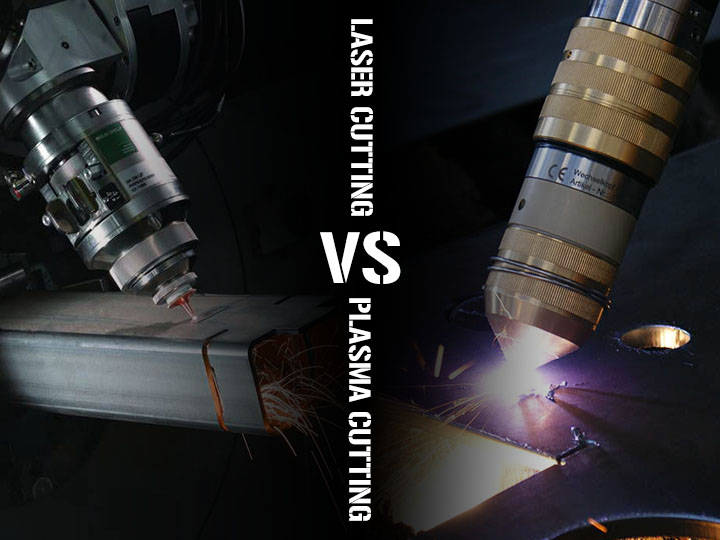
Confused about the optimal metal cutting equipment for your workshop? We carry out an all-round performance comparison between fiber laser cutting equipment and plasma cutting systems to help you pick the ideal metal cutting machine according to your production demands.
Working Principle Contrast
Wondering how a plasma cutting system processes metal? It adopts oxygen, nitrogen or mixed gas as cutting medium, leverages ultra-high temperature plasma arc to melt and gasify metal locally at cutting slits. Meanwhile, high-speed plasma airflow blows away molten metal residue to form complete cutting kerfs.
Then how does a laser cutter operate? Laser generators emit concentrated light beams, which pass through multiple reflecting mirrors and get focused by optical lenses onto metal workpieces. Intense localized heat forms at the focal spot to instantly melt or vaporize metal substrates. Auxiliary compressed gas blows molten slag out of slits to finish the cutting procedure.
Full Comparison: Laser Cutting Machine VS Plasma Cutting Machine
Application Scope Comparison
Spiritore laser cutting machines boast ultra-wide material compatibility, supporting both metallic and non-metallic raw materials. CO2 laser cutters handle non-metal workpieces including timber, textile cloth, leather, foam and paper; fiber laser equipment specializes in all kinds of metal cutting tasks. Parts processed by laser show minimal plate deformation.
Plasma cutting systems only work for conductive metals: carbon steel, stainless steel, aluminum alloy, brass, copper, cast iron as well as precious metals gold and silver. Plasma cutting brings obvious thermal deformation to workpieces with low machining precision, and rough cutting surfaces usually demand secondary polishing or grinding.
Cutting Thickness Comparison
For industrial mass production, fiber laser cutters normally process carbon steel plates under 20mm, with maximum cutting capacity up to 40mm. For stainless steel, regular processing thickness stays below 16mm and the extreme cutting limit reaches 25mm. Laser cutting speed drops sharply once metal plate thickness rises.
Plasma cutters cover metal thickness ranging from 0mm to 120mm. Among all thickness ranges, 20mm thick metal delivers balanced cutting quality and the best overall cost performance for plasma systems.
Cutting Precision Comparison
Laser cutting creates extremely narrow kerfs with parallel vertical side walls, finished parts achieve dimensional tolerance within ±0.2mm. Plasma cutting’s dimensional accuracy only hits ±1mm at best.
Cutting Speed Comparison
A 1000W fiber laser cuts 2mm thin mild steel at 600 centimeters per minute; it processes 5mm polypropylene boards at a top speed of 1200cm/min. Plasma cutting runs slower with lower precision, it fits thick metal plate cutting yet produces sloped cut end faces.
Kerf Width Comparison
Laser cutting owns finer cutting lines than plasma equipment, kerf width only averages 0.5mm. Plasma cutting generates wider slits between 1mm and 2mm.
Cutting Surface Quality Comparison
Laser-cut workpieces have far lower surface roughness values compared with plasma-cut parts, and the quality gap becomes more prominent when processing thinner metal sheets.
Equipment Investment Cost Comparison
Laser cutter prices vary greatly by model configuration. Entry-level CO2 laser machines cost roughly $5,000, while high-power 10000W fiber laser cutting equipment costs around $100,000. Laser cutting basically requires zero daily consumables, yet it has the highest upfront investment among all metal cutting solutions. Besides expensive initial purchase, regular operation and maintenance fees remain high.
Plasma cutting systems carry far lower overall procurement costs than laser machines, prices fluctuate based on power output and brand standards. Plasma operation also generates continuous consumable expenses, but its core advantage lies in supporting any electrically conductive metal for cutting tasks.
Advantages & Disadvantages Breakdown
Laser Cutting Machine
Advantages
- Ultra-narrow cutting kerf: Laser processed surfaces are smooth enough for direct welding without extra grinding work.
- Fast processing speed: Thin metal cutting speed can hit 10 meters per minute, largely surpassing plasma cutting efficiency.
- Superior cutting finish: Tiny thermal deformation, low surface roughness, nearly vertical cut faces without obvious slopes.
- Ultra-high machining precision: Single positioning precision reaches 0.05mm, repeated positioning accuracy up to 0.02mm.
- Extensive material compatibility: Process metal, timber, plastic, rubber, PVC, leather, fabric, acrylic and dozens of other raw materials for diversified production.
Disadvantages
High total operation cost including expensive initial equipment investment and costly routine maintenance. Laser cutting only achieves good cost-effectiveness on thin metal sheets. For thick plate mass cutting without strict surface precision standards, plasma equipment is a more reasonable alternative.
Plasma Cutting Machine
Advantages
Outstanding cutting speed for extra-thick metal plates, faster than both laser cutting and flame cutting. Lower equipment purchasing price and cheaper daily maintenance compared with laser cutting systems.
Disadvantages
- Poor verticality of cutting cross-section: Cutting surfaces form obvious large inclined bevels on one side.
- Heavy slag adhesion on workpiece surfaces after cutting. Slag removal polishing procedures are mandatory, adding extra labor expenditure.
- Hazardous waste gas and strong electric arc radiation produced during operation due to plasma working principles. Underwater plasma cutting technology can mitigate these environmental drawbacks.
- High long-term consumable loss: Core cutting nozzles mostly rely on imported supplies, bringing continuous high spare part costs.
Conclusion
Your final choice between laser cutting and plasma cutting relies on multiple key factors: metal plate thickness, required machining precision, total project budget and customized production standards.
Both laser and plasma cutting technologies keep upgrading constantly, with upgraded performance and expanding applicable industries. For large batch industrial metal fabrication or intricate high-precision pattern cutting, laser and plasma cutting equipment remain irreplaceable core processing machinery in modern metal manufacturing workshops.
Frequently Asked Questions
Q1: What raw materials can laser cutting machines process?
A1: Laser cutting equipment supports timber, fabric, leather, foam sheets, paper and various metal plates.
Q2: How much does an entry-level CO2 laser cutter cost?
A2: Low-budget CO2 laser cutting machines start at approximately 5,000 US dollars.
Q3: What obvious side effect comes with plasma cutting processing?
A3: Plasma cutting creates strong thermal impact and thermal deformation on metal workpieces.
Q4: Which metal materials can plasma cutting systems cut?
A4: Plasma cutters process all conductive metals: stainless steel, aluminum, copper, cast iron, carbon steel, brass, gold and silver.