Footwear manufacturers that produce sneakers, casual shoes and safety boots always face prominent production bottlenecks when cutting sponge composite shoe materials. Sponge composite cloth is made of elastic foam bonded with textile fabric, featuring soft, compressible physical properties. Traditional single-layer cutting tools require repeated feeding, resulting in extremely low production speed, excessive leftover materials and inconsistent dimensional accuracy of shoe blanks. These universal industry pain points increase labor costs, raise raw material scrap rate and delay delivery of mass footwear orders, greatly weakening factory market competitiveness.
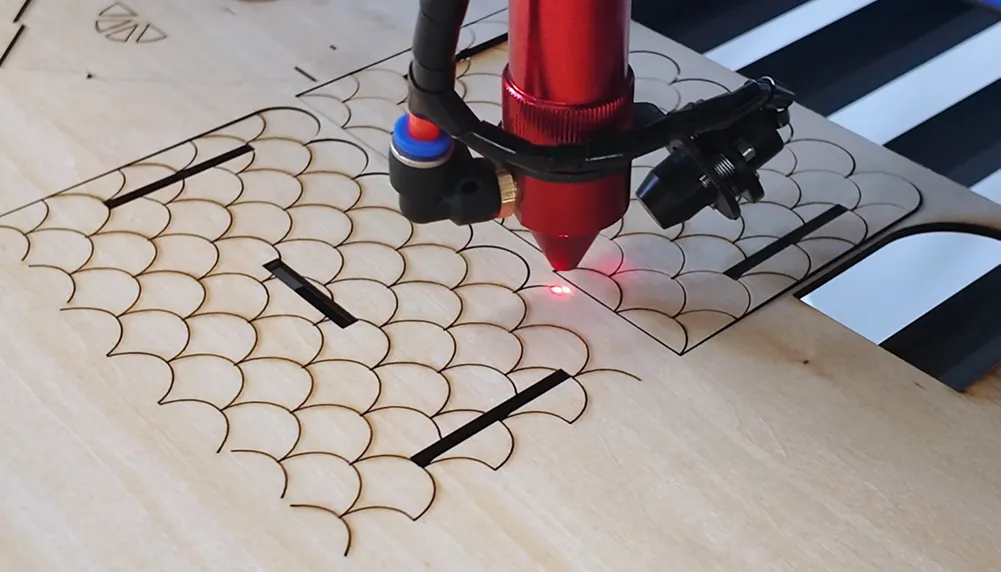
Three mainstream traditional shoe cutting technologies are widely used in shoe workshops, all unable to support thick multi-layer synchronous cutting and carrying obvious inherent defects. Manual cutting relies on paper templates and handheld blades, only processing one layer at a time. Operators need to repeatedly spread and fix materials, consuming huge labor resources. Uneven pulling force stretches composite cloth to form jagged edges, and random manual layout causes severe waste of high-cost shoe raw materials. Workers need regular rest so continuous mass production cannot be realized. Fixed steel die cutting can stack only 1-2 thin layers at most; rigid stamping extrusion compresses sponge core to permanent deformation, leading to mismatched left and right shoe parts. Every shoe style needs customized molds with high manufacturing fees and long lead times, unable to quickly respond to mixed bulk orders. Laser cutting adopts high-temperature thermal separation; heat melts foam inner core and burns fabric surface, creating yellow brittle edges, while toxic smoke pollutes the workshop and fails environmental standards.
Multi-layer vibration knife cutting equipment specialized for footwear solves all efficiency and material waste defects of traditional shoe processing at one time. The machine supports synchronous cutting of up to 5cm thick stacked sponge composite materials, greatly reducing repeated feeding steps and multiplying overall production speed. Adopting high-frequency cold vibration cutting mode, the blade separates composite layers without heat or strong static pressure, so sponge will not collapse and fabric surface stays intact, with ultra-smooth cut edges free of burrs. Built-in intelligent nesting software arranges shoe parts compactly on raw rolls to maximize material utilization and cut long-term procurement expenditure. Simple one-click digital operation lowers staff training difficulty, and the machine can run non-stop for long hours to handle large batch shoe orders effortlessly without frequent mold replacement. It freely processes arbitrary irregular shoe uppers, liners and midsole parts to match diversified footwear design demands.
This multi-functional CNC multi-layer vibration knife cutting machine covers all mainstream flexible shoe materials widely used in footwear mass production. Applicable raw materials include sponge composite fabric, EVA shoe midsole foam, PU synthetic leather, fly knit upper cloth, canvas shoe material, latex lining sponge, XPE shock absorption foam, flocking shoe cloth, waterproof composite textile, soft rubber shoe pad, thin woven lining cloth, flame retardant foam composite material. Each shoe material owns unique elasticity, foam density and composite bonding structure that directly affect multi-layer cutting stability, and the machine automatically adjusts cutting depth, vibration frequency and vacuum adsorption force to fit stacked thickness and material softness.
Sponge composite fabric has foam and fabric double-layer structure; manual single-layer cutting wastes lots of raw materials, die extrusion collapses sponge buffer pores, laser heat causes interlayer delamination. EVA shoe midsole foam is lightweight elastic, thin-layer die cutting leads to low efficiency, continuous thermal cutting makes foam shrink unevenly in bulk production. PU synthetic leather has thin surface coating, single-layer processing extends production cycle, high temperature melts coating to peel off shoe surface. Fly knit upper cloth features loose fiber weave, repeated manual cutting creates messy frays and huge labor input. Canvas shoe material has tight yarn texture, multi-layer manual positioning shift produces asymmetric shoe blanks. Latex lining sponge has strong resilience, rigid stamping permanent deformation leads to inconsistent shoe inner size. XPE shock absorption foam owns closed-cell structure, single-layer cutting cannot meet large order delivery schedule. Flocking shoe cloth carries short surface fluff, thermal cutting hardens fluff and ruins shoe appearance. Waterproof composite textile bonds fabric and waterproof film, repeated single feeding wastes time and labor. Soft rubber shoe pad has high toughness, thin-layer processing slows down whole production line. Thin woven lining cloth is ultra-smooth, frequent manual shifting causes dimensional errors in mass cutting. Flame retardant foam composite material adds fire retardant additives inside foam, high temperature destroys flame retardant components and reduces footwear safety performance.
Different from traditional single-layer cutting’s low speed, heavy labor and high scrap drawbacks, multi-layer vibration knife cold cutting processes up to 5cm stacked shoe composite materials in one pass, drastically shortening processing time. Cold vibration avoids foam collapse and fabric thermal damage, ensuring uniform smooth edges for all shoe blanks. Intelligent compact nesting minimizes leftover shoe materials and cuts long-term raw material expenditure. Uninterrupted automatic operation greatly lifts factory daily output to cope with peak mass order seasons. One single machine adapts all foam and textile shoe materials, removing repeated mold development fees for various shoe styles. Footwear manufacturers can finish sample trial cutting and continuous bulk production on one workstation, lower labor and material waste cost, stabilize shoe blank dimensional consistency and shorten mass order delivery cycle simultaneously.