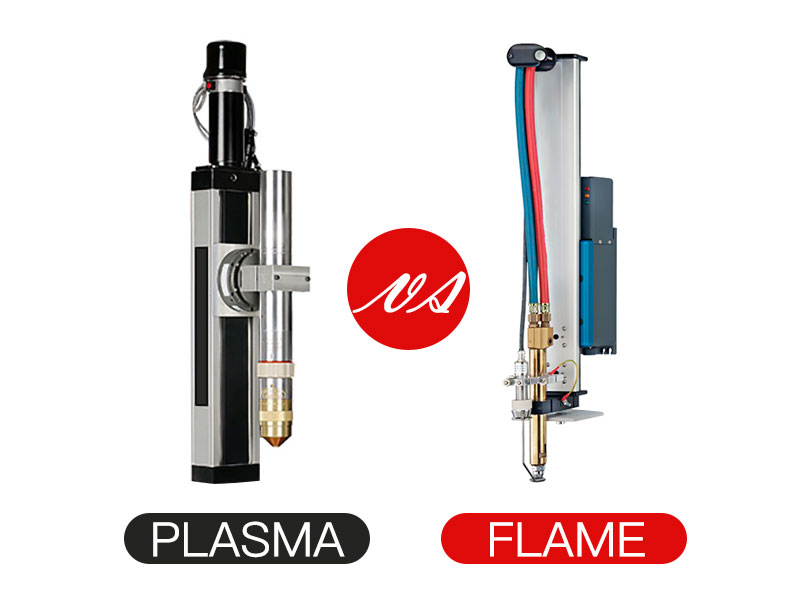
Wondering which metal cutting equipment delivers better performance: plasma cutting machinery or oxy-fuel flame cutting gear? There’s no universal perfect answer—your actual processing needs determine the optimal choice. Let’s break down their core differences and applicable scenarios below.
Plasma Cutting Equipment vs Oxy-Fuel Flame Cutting Machine
Compared with plasma cutting gear, oxy-fuel flame cutting torches stand out as a cost-effective solution for carbon steel plates thicker than 1 inch. Plasma cutting units, by contrast, perform excellently on thin workpieces, covering both ferrous and non-ferrous metal varieties.
First, let’s clarify the core operating principles of these two cutting devices.
How Plasma Cutting Machines Operate
Plasma cutters adopt working gases including compressed air, nitrogen and oxygen. An electric arc passes through the gas medium, ionizing the gas into high-temperature plasma. The high-speed plasma jet penetrates metal materials rapidly to complete cutting.
This high-velocity plasma jet reaches an extreme temperature of 30,000–40,000 °F, with a flow speed up to 20,000 feet per second. This ultra-high heat and flow rate are the key reasons plasma cutting boasts ultra-fast processing speeds.
Simply put, plasma cutting relies on controlled high-temperature ablation to separate metal workpieces.
A surrounding protective gas layer covers the cutting zone simultaneously, boosting cutting finish, keeping cutting lines straighter and cutting slits narrower.
How Oxy-Fuel Flame Cutting Torches Work
Many people mistakenly believe flame cutting merely melts metals, yet this is only half of its working logic.
Oxy-fuel cutting relies on injecting high-pressure oxygen into preheating flames to trigger an oxidation reaction on carbon steel, turning metal into molten slag. The high temperature only accelerates this chemical oxidation process, similar to ultra-fast, controllable rust formation.
The preheating flame heats carbon steel to roughly 1800 °F. High-pressure oxygen then oxidizes the base metal and blows away molten slag to form cutting gaps.
The maximum cutting thickness of carbon steel directly depends on the equipment’s heating capacity and oxygen injection pressure. Large industrial flame cutting equipment can cut steel plates over 12 inches thick, though the cutting cycle will be much longer.
Core Contrast: Plasma Cutting Machine VS Oxy-Fuel Flame Cutter
表格
| Plasma Cutting Equipment | Oxy-Fuel Flame Cutting Machine |
|---|---|
| Compatible with all conductive metals: carbon steel, iron, stainless steel, aluminum, brass, copper | Only fits carbon steel & iron; produces rough, low-quality cuts on thin non-ferrous metals |
| Standard industrial models max out at 2-inch steel cutting thickness; optimal processing range ≤ 3/4 inch | Supports ultra-thick metal cutting, capable of handling steel over 12 inches thick with matched nozzles |
| Thin cutting kerf | Wide cutting kerf |
| Higher initial procurement cost | Lower upfront purchase cost, more budget-friendly |
| Smooth cutting surface; only wire brushing needed for edge finishing | Rough cutting surface; grinding required for post-processing polishing |
| Ultra-fast cutting speed | Relatively slow cutting efficiency |
| Maximum cutting thickness determined by machine power configuration | Replace different nozzle sizes to adapt to varying metal thicknesses |
Detailed Comparison Between Plasma Cutting and Oxy-Fuel Flame Cutting
Applicable Materials & Scenarios
Plasma cutting takes the lead in material compatibility. Since it uses ionized electrically conductive gas, plasma cutters can rapidly process all conductive metals, including aluminum, carbon steel, stainless steel, brass and copper.
Oxy-fuel flame cutting is designed specifically for carbon steel, with obvious limitations on other metal types.
Amateurs may notice thin aluminum or stainless steel can be cut roughly with flame torches, yet the finished cuts are jagged and uneven. The root cause lies in its oxidation-based working principle: stainless steel and aluminum have strong oxidation resistance, so the equipment can only melt materials instead of forming removable slag. This method only works on thin sheet metals and cannot process thick non-ferrous plates.
Besides poor surface finish, non-carbon steel workpieces cut via flame torches suffer severe thermal deformation and wide heat-affected zones. Therefore, oxy-fuel cutting is only recommended for carbon steel processing.
Cutting Thickness
Oxy-fuel cutting dominates ultra-thick carbon steel processing. For 4-inch thick steel axles and heavy solid steel components, flame cutting torches are the top pick.
Heavy-duty industrial flame cutting equipment can cut solid steel up to 4 feet thick, though such ultra-thick processing demands rarely appear in daily workshops. Conventional large nozzles support maximum 12-inch steel cutting, while small nozzles deliver narrower kerfs yet limit cutting thickness.
Plasma cutting cannot match flame cutting in thick plate processing capacity. Heavy industrial plasma units only reach a maximum cutting thickness of 2.75 inches, standard industrial machines top out at 1-inch steel, and household hobby plasma cutters can merely process 1/4–3/8 inch thin sheets.
Cutting Speed
Plasma cutting holds absolute advantages in processing efficiency. Its ultra-high operating temperature drastically shortens cutting time. Under identical workpiece thickness conditions, flame cutting can never match plasma cutting’s speed.
Mobility & Field Operation
Oxy-fuel flame cutting systems excel in outdoor portability. The complete set can be fixed onto pickup trucks for on-site cutting tasks such as farm machinery disassembly in open fields, with no power supply restrictions.
Plasma cutters are compact and lightweight (hobby models weigh 20–30 lbs), easy to move indoors, yet they require stable power supply. They suit fixed workshop production but bring inconveniences for off-grid outdoor field work.
Consumable Parts & Operating Costs
Both cutting solutions wear out core consumables like cutting nozzles and need regular replacement, yet the maintenance cost stays low for both.
Plasma cutting gains an edge in daily operation: oxy-fuel equipment requires repeated refilling of oxygen and fuel gas cylinders, while most plasma cutters only need compressed air as working medium. However, plasma devices consume relatively large amounts of electricity during operation.
Equipment Function Expansion
Oxy-fuel flame torches feature simple operation; users only need to switch matching nozzles for different thickness tasks. A mandatory safety accessory is flashback arrestors to prevent gas explosion risks.
When purchasing plasma cutting equipment, buyers need to learn several professional technical parameters for better selection:
- Pilot ArcA built-in small electrode maintains continuous plasma arc without close contact with workpieces. It greatly improves processing stability for expanded metal and wire mesh, supporting intermittent cutting without repeated arc ignition. This function barely improves efficiency for garage sheet metal cutting or vehicle dismantling, yet it drastically speeds up mass mesh processing.
- High Frequency IgnitionSimilar to welding machine ignition technology, high-frequency high-voltage current ignites plasma arcs effortlessly. It creates smaller, cleaner piercing holes and simplifies cutting startup for medium-thick plates. Hobby thin-sheet plasma cutters usually don’t require this function; a common trick is to pierce materials slightly outside the formal cutting line before shifting the arc onto the designated path.
Multifunctional Versatility
Both devices have exclusive functional strengths the other cannot replicate:
Oxy-acetylene flame systems support multi-scenario operations via interchangeable torches: metal cutting, welding, heating, hard surfacing, soldering, brazing, metal blending and gouging. Though its cutting function is limited to carbon steel, it realizes welding for most metal materials.
Plasma cutting equipment often integrates three-in-one all-in-one designs, supporting plasma cutting, TIG welding and MMA arc welding. Apart from these three core functions, plasma machines are mainly dedicated to metal cutting tasks.
How to Choose Between Plasma Cutting and Oxy-Fuel Flame Cutting Equipment
Choose Oxy-Fuel Flame Cutting Torch If:
- Your core processing material is carbon steel
- You frequently process heavy machinery and thick solid steel components
- You need to cut thick steel axles and massive steel blocks
- You pursue a full set of metal processing tools for diversified work
- Multifunctional performance matters: you need metal cutting, welding and heating capabilities in one set of equipment
- Cutting speed is not your priority, and you only need occasional thick plate cutting
- You often perform off-grid outdoor field cutting without accessible power sources
Choose Plasma Cutting Machine If:
- You need fast disassembly work such as cutting truck frames
- You engage in metal fabrication and precision metal processing
- You want to complete various metal processing projects with integrated equipment
- High-speed cutting of metal sheets and medium-thick plates is your core demand
- You create artistic metal sheet sculptures with complex cutting contours
- You process a wide range of ferrous and non-ferrous metal materials daily
- Metal cutting is your primary work, and multi-functional welding features are secondary requirements
- Most operations are completed indoors in fixed workshops, with low demand for off-grid mobility