Fluorescent and high-visibility reflective fabrics are widely applied in safety workwear, night running sportswear, stage performance costumes, party decorative textiles and traffic warning accessories. Most garment manufacturers still rely on manual scissors cutting, hydraulic die cutting and laser cutting to process luminous coated textiles. These conventional processing methods easily damage the special fluorescent coating, bring unstable cutting quality and cannot meet the market demand for multi-style small-batch customization and mass efficient production. This article fully compares traditional fluorescent fabric cutting processes and CNC vibrating knife cold cutting machines, covering core industrial pain points, exclusive competitive advantages of vibrating knife equipment, complete applicable fabric categories and physical characteristics of mainstream fluorescent luminous textiles.
Core Industry Pain Points of Traditional Fluorescent Fabric Cutting
First, manual cutting causes severe fabric stretching, frayed edges and coating damage. Workers draw outlines manually and cut fluorescent cloth with scissors. Soft luminous textile stretches easily under pulling force, leading to irregular dimensional deviation. Broken loose fibers appear on cutting edges, and manual pulling will scratch the surface fluorescent coating, weakening the luminous warning effect of finished garments. Every cut piece needs secondary edge trimming, adding extra labor procedures and reducing overall production efficiency.
Second, hydraulic die cutting lacks flexibility for diversified custom styles. Each unique garment silhouette, decorative pattern and warning strip size requires customized steel cutting molds. Mold manufacturing generates extra procurement costs and a waiting cycle of several working days, delaying sample delivery. Factories cannot flexibly receive small-batch custom orders of stage costumes and personalized night running clothes, losing many customized clients.
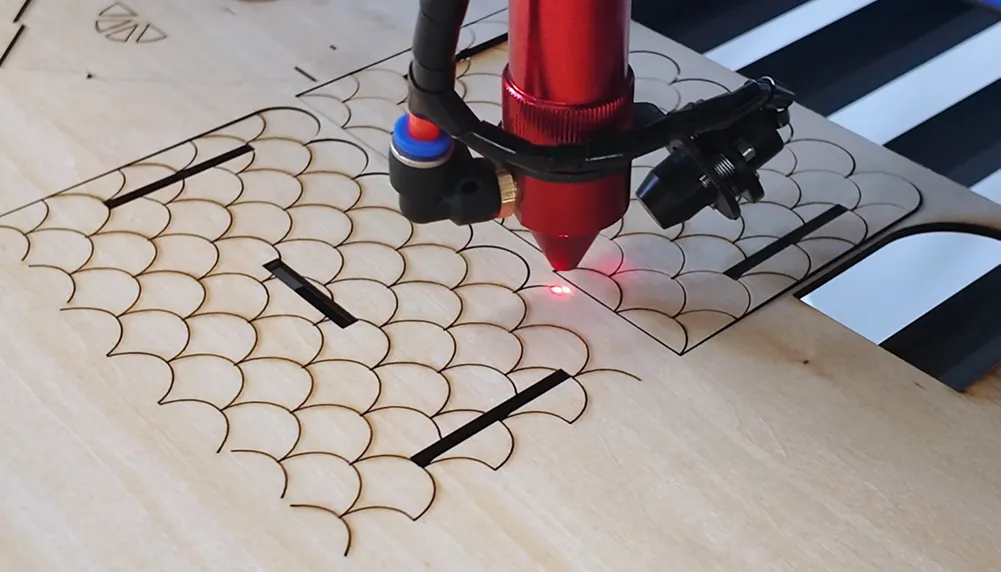
Third, laser thermal cutting permanently destroys fluorescent coating and pollutes the workshop. Laser cutting relies on high temperature to melt fabric fibers. Intense heat will scorch, fade and peel off the surface luminous coating, completely losing the high-visibility fluorescent function. Thermal cutting also releases toxic smoke and irritating odor, and burnt hard edges affect subsequent sewing processing, greatly raising defective product rate.
Fourth, unreasonable manual layout creates massive raw material waste. Workers arrange fabric blanks purely by personal experience without intelligent path optimization. Large blank areas remain on fluorescent fabric rolls, producing plenty of leftover scraps. Luminous coated fabrics carry higher raw material costs, and long-term waste continuously compresses factory profit margins.
Fifth, unstable material fixation leads to inconsistent finished product size. Traditional cutting tables have no vacuum adsorption function. Thin fluorescent woven fabric and multi-layer composite luminous cloth shift, wrinkle and stretch under cutting force, resulting in uneven size of finished workwear and performance costumes, increasing rework workload.
Sixth, low automation leads to heavy labor dependence and discontinuous production. Manual cutting and frequent mold replacement require multiple skilled operators to work simultaneously, and labor expenditure rises year by year. Traditional equipment needs regular downtime to replace fabric rolls, unable to support uninterrupted all-day mass production, which easily triggers delivery delays for large bulk orders of safety clothing.
Traditional Cutting VS Vibrating Knife Cutter: Core Competitive Advantages
- Pure cold vibration cutting fully protects fluorescent luminous coatingThe vibrating knife adopts high-frequency physical vibration cold cutting without heating or strong extrusion force. It cleanly separates textile fibers without generating high temperature, so the surface fluorescent coating will not melt, fade or peel off, completely retaining the high-visibility luminous warning performance of fabrics. Cutting edges are flat and smooth with zero loose threads, no secondary trimming work is needed, and the soft texture of luminous textiles stays intact after cutting.
- Dieless digital cutting supports unlimited diversified custom luminous stylesNo customized steel cutting molds are required. Operators import garment outline CAD drawings into the cutting control system, and the machine can switch different safety workwear, stage costume and night running apparel patterns within one minute. Small-batch trial orders and personalized custom fluorescent textile products no longer bear extra mold production fees and waiting cycles, greatly improving factory order receiving flexibility.
- Intelligent automatic nesting algorithm drastically reduces fluorescent fabric wasteBuilt-in professional textile nesting software automatically arranges all garment cutting parts on luminous fabric rolls, reasonably filling blank gaps to minimize leftover scraps. Material utilization rate rises by 13% to 22% compared with manual layout, continuously cutting high-cost fluorescent coated raw material expenditure for long-term mass production.
- Full-surface vacuum adsorption table firmly locks thin fabric to avoid stretching deformationWhole-table negative pressure vacuum adsorption tightly fixes thin fluorescent woven cloth, thick multi-layer composite luminous fabric and reflective warning strips during cutting. Materials cannot wrinkle, stretch or slide under blade vibration force, thoroughly solving dimensional deviation problems caused by unstable fixation and significantly lowering defective product rate.
- Fully automatic continuous non-stop cutting sharply cuts labor demandThe CNC vibrating knife cutter supports automatic roll feeding and round-the-clock uninterrupted cutting. One single machine can replace 4 to 6 skilled manual cutting workers. Only one ordinary staff member is needed to monitor equipment operation and replace fabric rolls, effectively solving the pain point of high labor cost and difficult worker recruitment for garment factories producing luminous clothing.
- Adjustable multi-layer synchronous stacking cutting improves batch production capacityBlade vibration pressure and cutting thickness can be freely adjusted to realize stacked multi-layer fluorescent fabric cutting at one time. Under the same working hours, the hourly output of finished luminous garments is multiple times higher than single-layer manual cutting. Factories can rapidly fulfill large-volume bulk orders of safety workwear and shorten product delivery cycles significantly.
- Eco-friendly processing creates clean, compliant workshop environmentDifferent from laser thermal cutting, vibrating knife cold cutting generates no toxic smoke, burnt fiber residues or pungent odor. The machine runs with low noise and low dust, fully complying with international factory environmental protection standards, and protects workers’ respiratory health during long-term fabric processing.
Complete List of Applicable Fluorescent & Reflective Fabric Cutting Materials
The cold vibrating knife cutter adapts to all mainstream luminous textile raw materials used for manufacturing safety workwear, night sports apparel and stage decorative fabrics, covering single-layer coated fluorescent cloth and multi-layer composite reflective textiles. The full material range includes fluorescent polyester coated fabric, high visibility reflective PES cloth, luminous nylon woven fabric, fluorescent cotton blended textile, elastic luminous spandex fabric, PVC coated warning fabric, mesh fluorescent breathable cloth, multi-layer composite reflective strip fabric, lightweight fluorescent chiffon, thick fluorescent canvas, heat transfer luminous textile, and knitted fluorescent sportswear cloth.
Physical Characteristics of Main Fluorescent Textiles & Matching Cutting Performance
- Fluorescent polyester & cotton blended coated fabricPhysical features: Thin woven fiber base with thin luminous coating on surface, heat-sensitive coating easy to melt and peel under high temperature, thin fabric prone to stretch and shift without vacuum adsorption.Cutting matching: Full vacuum adsorption firmly fixes thin textile; low-frequency cold vibration cleanly separates woven fibers without damaging surface fluorescent coating, cutting edges have no scattered loose threads.
- High visibility reflective PES composite clothPhysical features: Multi-layer composite structure of fiber base and micro-prismatic reflective film, inconsistent hardness between fabric and reflective coating, easy layer separation under unstable cutting force; high temperature will destroy micro reflective particles and weaken warning effect.Cutting matching: Controllable cutting depth locks composite layers tightly during vibration cutting, no delamination or dislocation between base cloth and reflective luminous film, reflective performance remains complete after cutting.
- Elastic luminous spandex sportswear fabricPhysical features: Elastic stretch fiber structure, soft thin texture, easy to stretch and distort under strong extrusion force; over-stretching will crack the surface fluorescent coating.Cutting matching: Low-amplitude gentle vibration blade avoids fabric stretching deformation, all cutting outlines keep accurate without coating cracking.
- Mesh fluorescent breathable cloth & fluorescent chiffonPhysical features: Loose mesh and thin translucent fiber structure, fiber ends easy to fray under uneven cutting force; thermal cutting will melt mesh holes and harden fabric edges.Cutting matching: Balanced soft vibration gently separates loose mesh fibers; cold cutting keeps mesh structure intact without melting hole deformation, no hard burnt edges.
- Thick fluorescent canvas & heat transfer luminous textilePhysical features: Dense thick fiber texture, thick luminous heat transfer layer on surface, strong compression resistance but easy to leave indentations under long-term mold extrusion; high temperature will make heat transfer coating fall off.Cutting matching: Balanced vibration cutting force avoids surface indentation; pure physical cold separation prevents heat transfer luminous layer peeling, cutting edges stay smooth and complete.
In summary, CNC cold vibrating knife cutting machines solve all core pain points of traditional fluorescent fabric cutting from luminous coating protection, custom order flexibility, raw material utilization, finished product quality and labor cost dimensions. For garment manufacturers focusing on high-visibility safety workwear, night running sportswear and stage luminous decorative textiles, intelligent vibrating knife fabric cutting equipment is an essential production upgrade solution.