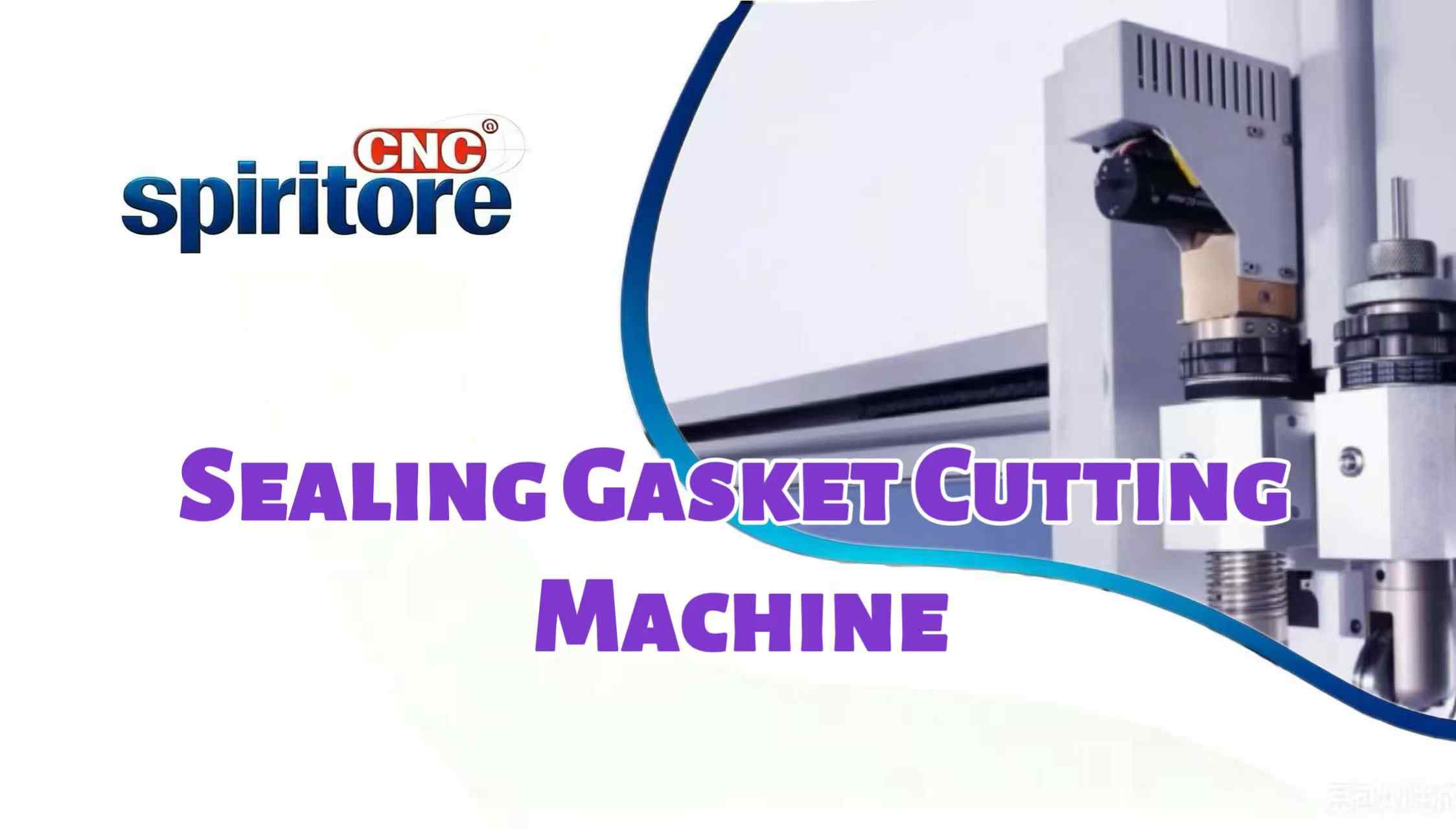
Manufacturers engaged in industrial sealing gasket manufacturing often face heavy production pressure brought by traditional cutting processes, especially under the current market demand of small-batch, multi-style customized orders. Sealing gaskets have strict requirements on dimensional accuracy and edge flatness, which directly determine the sealing performance of mechanical equipment. Conventional cutting modes require repeated mold customization, accompanied by serious material waste, low production flexibility and long sample delivery cycles. These universal industry pain points raise comprehensive production costs, slow down customer order response speed and weaken the market competitiveness of gasket factories.
The two mainstream traditional gasket cutting technologies are manual cutting and steel rule die stamping, both with obvious inherent drawbacks. Manual cutting completely depends on workers’ operation experience, without unified layout standards. Random manual nesting leads to extremely low raw material utilization, and uneven cutting force creates irregular burrs and dimensional errors on gaskets. It cannot process complex irregular patterns efficiently, and the whole processing speed is slow, unable to cope with multi-batch small customized orders. Steel rule die cutting needs to produce a dedicated die for every different gasket shape, which generates extra mold manufacturing fees and long production preparation cycles. Once customer design drawings are revised, new molds have to be remade, bringing additional time and capital loss. Rigid extrusion force squeezes elastic sealing materials such as rubber and graphite to cause permanent compression deformation, damaging the flatness of gasket sealing surfaces. Besides, fixed die layout cannot maximize raw material utilization, and a large amount of leftover scraps are produced after each batch of cutting.
Vibration knife cutting equipment realizes full digital die-free cutting, completely breaking the limitations of traditional gasket processing technology. The built-in intelligent automatic nesting software adopts micro-gap layout algorithm to arrange all gasket graphics reasonably on the sheet material, effectively lifting raw material utilization rate by about 30% compared with manual layout, greatly cutting material waste expenditure. The equipment supports arbitrary custom graphic cutting according to customer design demands, with extremely flexible production logic, perfectly matching the market trend of multiple varieties and small batches. The whole operation flow is simple and automated; operators only need to import CAD design files to start cutting without mold making links, realizing rapid sample production within a short time. High-frequency cold vibration cutting avoids strong extrusion deformation of sealing materials, keeping gasket edges smooth and flat without burrs to guarantee stable sealing effect after installation.
This multi-functional vibration knife cutting machine covers all mainstream flexible sealing materials widely used in mechanical, chemical, automotive and pipeline industries. Applicable raw materials include nitrile rubber sheet, silicone rubber plate, EPDM rubber, fluororubber, PTFE polytetrafluoroethylene sheet, flexible graphite plate, non-asbestos sealing board, wool felt gasket material, composite fiber sealing cloth, PU foam sealing pad, cork sealing sheet and food-grade silica gel gasket. Each material has distinct physical characteristics that affect cutting quality and sealing performance, and the machine automatically adjusts cutting speed, vibration frequency and down pressure to match different hardness, elasticity and thickness of sealing sheets.
Nitrile rubber sheet has moderate elasticity and oil resistance; manual or die extrusion easily causes edge shrinkage and burrs, affecting oil sealing performance. Silicone rubber plate features wide temperature resistance and soft texture, rigid stamping force will permanently compress its elastic structure and reduce resilience. EPDM rubber owns outstanding weather resistance, uneven cutting pressure leads to incomplete penetration and irregular outlines. Fluororubber has high density and strong chemical corrosion resistance, rough traditional cutting creates surface cracks that lose anti-corrosion ability. PTFE sheet has cold flow property under pressure, die stamping causes permanent creep deformation and size deviation. Flexible graphite plate is composed of stacked thin graphite layers, extrusion cutting leads to layer separation and powder falling. Non-asbestos sealing board contains mixed fiber structure, forced tearing by traditional tools produces loose fiber burrs. Wool felt gasket material has fluffy internal fibers, manual cutting pulls fibers to form messy rough edges. Composite fiber sealing cloth is bonded by multi-layer fiber fabrics, thermal or extrusion cutting triggers interlayer peeling. PU foam sealing pad is light and porous, static pressure mold cutting collapses internal buffer pores and weakens sealing performance. Cork sealing sheet has natural porous texture, excessive cutting force breaks the cork structure and causes material fragmentation. Food-grade silica gel gasket requires smooth and pollution-free cutting surfaces, high-temperature laser cutting will carbonize edges and fail food safety standards.
Different from the fixed mold layout, extrusion deformation and low material utilization of traditional cutting processes, vibration knife digital cutting realizes flexible pattern switching without any tooling cost. Intelligent micro-gap automatic nesting optimizes raw material layout to minimize leftover waste, significantly reducing material procurement costs for gasket manufacturers. One single machine adapts all the above sealing materials, eliminating repeated mold development and storage costs for various customized gasket styles. Factories can finish sample trial production and mass customized cutting on one workstation, shorten order delivery cycles, lower comprehensive production costs and improve the sealing quality of finished gaskets at the same time.