Inherent Cutting Difficulties of Cork Wood Materials
The unique cellular structure of cork wood determines its special processing characteristics, making it different from conventional rigid materials and bringing multiple challenges to cutting work. First of all, cork features high elasticity and resilience. Composed of countless air-filled cellular structures, it is prone to deformation under external pressure and rebound after cutting, leading to shrinkage and burrs on the cutting section with ordinary cutting tools. Secondly, cork has a soft texture with intertwined internal fibers. Although its density is low, the crisscross fiber structure is easy to cause wire drawing and tearing during cutting, damaging the integrity of finished products. Thirdly, cork products have a wide thickness range, covering ultra-thin gaskets of 0.5mm and thick cork boards over 50mm, which cannot be adapted by a single conventional cutting process. In addition, cork processing is sensitive to dust debris. Fine cork powder generated during cutting is easy to adhere to the tool head, blunting the blade and continuously reducing cutting accuracy and surface finish.
Pain Points of Traditional Cork Cutting Processes
At present, three traditional cutting methods are commonly used in the cork processing industry, all with obvious functional defects that restrict product quality and production efficiency. Manual cutting with utility knives is low-cost but extremely inefficient, with large dimensional errors and rough, untrimmed edges, only suitable for sporadic small-batch sample processing. Laser cutting works with medium efficiency and cost, but it relies on high-temperature thermal cutting. As a flammable and porous material, cork is prone to edge carbonization, yellowing and blackening during laser processing, accompanied by pungent odors. More importantly, high-temperature cutting brings potential fire hazards to cork powder, making it unable to meet the high environmental and appearance requirements of high-end products such as cork flooring, coasters and customized crafts. Die cutting is applicable for fixed-shape products, but it requires high mold opening costs and long customization cycles, with extremely low flexibility for irregular and updated cork products, failing to adapt to the current personalized and diversified market demand.
Comparison of Three Mainstream Cork Cutting Technologies
To help manufacturers select suitable processing methods, we have comprehensively compared manual cutting, laser cutting and
oscillating vibration knife cutting from multiple dimensions. Manual utility knife cutting has the lowest cost but poor precision and efficiency, limited to temporary small-batch processing. Laser cutting has moderate comprehensive performance but obvious quality defects and safety risks, only suitable for ultra-thin cork sticker processing scenarios. In contrast, the vibration knife cutting machine adopts cold mechanical cutting technology, featuring smooth cutting sections, no thermal deformation, high operational efficiency and moderate equipment cost, perfectly compatible with cork materials of all thicknesses and various shaped products, becoming the mainstream choice for modern cork processing enterprises.
Core Advantages of Oscillating Vibration Knife Cutting Machine for Cork Processing
The
digital oscillating vibration knife cutting machine relies on high-frequency up-and-down reciprocating blade vibration to complete cutting, belonging to pure cold processing technology, which perfectly solves all pain points of traditional cork cutting and matches the processing characteristics of soft and heat-sensitive cork materials.
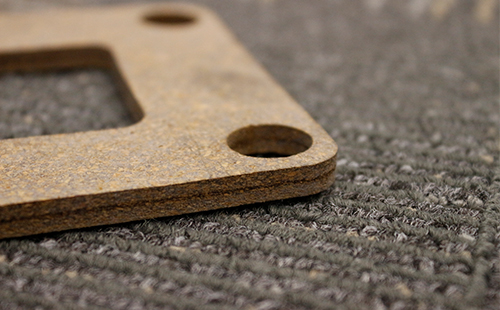
First, it achieves zero-burr and zero-thermal-impact cutting. The physical cutting method produces no high temperature, keeping the original color and flatness of the cork section. The cutting edge is neat without chipping or yellowing, eliminating the need for secondary polishing and trimming processes, greatly simplifying the production flow.
Second, it supports high-precision molding with a tolerance of ±0.1mm. Equipped with professional CNC positioning and graphical programming system, the equipment can accurately restore various complex design drawings, easily completing the cutting of special-shaped sealing gaskets, patterned crafts, circular cork parts and personalized customized products.
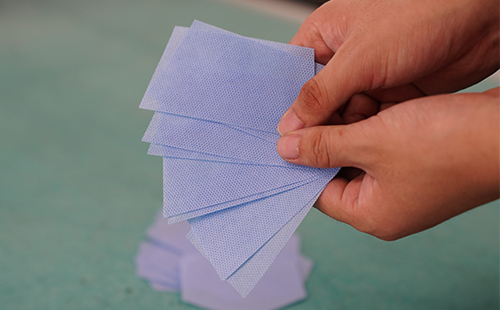
Third, it covers an ultra-wide cutting thickness range. By replacing different professional tool heads, it can process ultra-thin cork sheets of 0.3mm to high-density thick cork boards of 60mm. The multi-layer stacking cutting function supports one-time processing of 5-10 layers of materials, exponentially improving batch production efficiency.
Fourth, it realizes environmentally friendly and dust-free processing. Matched with a professional dust collection system, the equipment can instantly absorb fine cork powder generated during cutting, avoiding powder adhesion on the blade, ensuring long-term stable cutting accuracy, and keeping the workshop production environment clean and compliant.
Fifth, it saves materials and labor costs intelligently. The built-in automatic typesetting software optimizes the cutting path intelligently, increasing cork material utilization by 15%-30% compared with manual cutting. One device can replace 3-5 manual workers, and product switching only needs to import new design drawings without repeated mold opening, greatly reducing customized production costs and shortening delivery cycles.
Solutions to Common Cork Cutting Problems
Even with professional vibration knife cutting equipment, improper parameter setting and operation may cause processing defects. Here are targeted solutions for frequent problems in cork cutting:
1. Fuzzy burrs on cutting edges: Check and replace blunt blades in time, appropriately increase the blade vibration frequency, and reduce the cutting running speed to ensure the blade completely cuts off intertwined cork fibers at one time.
2. Incomplete cutting and bottom adhesion of thick cork boards: Adopt a graded cutting strategy of shallow cutting first and full penetration later, reduce the cutting speed, increase the vibration frequency, and check the vacuum adsorption force of the workbench to avoid material displacement leading to incomplete cutting.
3. Dimensional deformation and rebound of finished cork products: Reserve a 0.1-0.2mm dimensional compensation in the design drawing according to cork's rebound characteristics. Place the raw materials in the workshop for more than 24 hours before processing to release internal stress and stabilize the material state.
4. Low efficiency of special-shaped cork cutting: Activate the automatic nesting and shared-edge cutting function to optimize the cutting path and reduce idle tool travel. Turn on the multi-layer stacking cutting mode to maximize single-batch output.
Professional Selection Criteria for Cork Wood Cutting Equipment
When purchasing special equipment for cork processing, manufacturers need to focus on five core configurations to match long-term production needs. First, high-power vacuum adsorption workbench. Lightweight cork sheets are easy to shift during processing, and strong and stable vacuum suction is required to fix materials and ensure cutting precision. Second, complete tool library configuration. It should be equipped with straight knives and round knives to adapt to cutting processing of cork materials with different thicknesses and shapes. Third, matched high-power dust removal system. A large amount of fine cork powder is generated during continuous production, and an efficient dust collection device can protect the guide rail and tool head and extend equipment service life. Fourth, user-friendly operating software. It needs to support mainstream design formats such as DXF and PLT, with automatic typesetting and nesting functions to realize intelligent material saving and simple operation. Fifth, professional after-sales technical support. Cork cutting parameter debugging has industry particularities, and choosing a manufacturer with rich cork processing experience can quickly solve production problems and reduce trial and error costs.
Summary
The core of high-quality cork processing lies in adopting cold cutting, high-frequency vibration and precise digital control technology. The
cork wood digital CNC cutting machine perfectly integrates these core advantages, completely avoiding the quality defects and safety hazards of traditional manual, laser and die cutting processes. With outstanding performance in cutting finish, processing precision, material utilization rate, environmental protection and production flexibility, it is the optimal processing equipment for mass production and personalized customization of cork gaskets, cork flooring, cork crafts and other products. For manufacturers still using traditional cork cutting methods, upgrading to professional digital vibration knife cutting equipment can effectively reduce long-term labor and material costs and improve product market competitiveness. We support free sample cutting and testing, allowing you to verify the processing effect intuitively before purchasing.