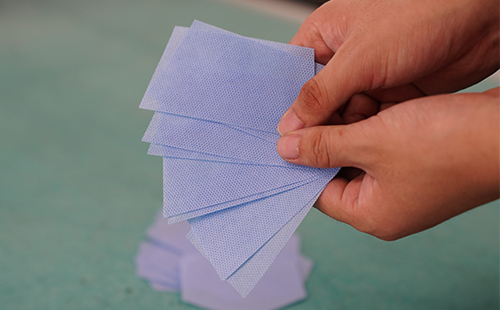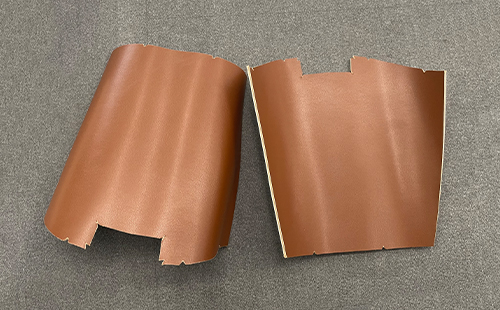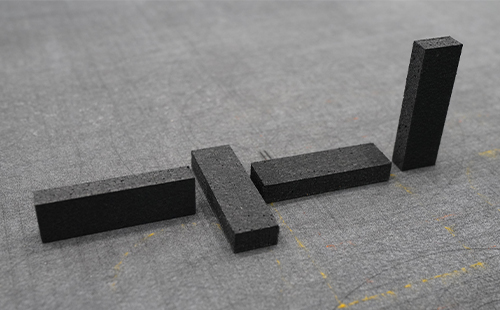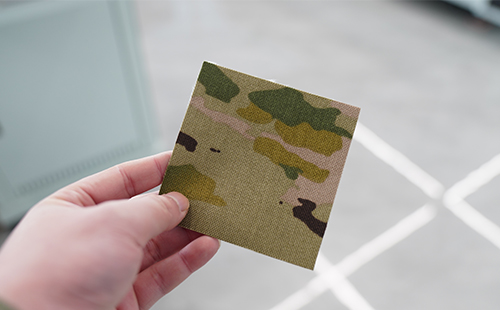
Composite fabrics are multi-layer bonded materials formed by laminating two or more different fabrics through hot pressing or glue bonding. Common types include fabric + sponge, textile + TPU film, non-woven + PE film, woven fabric + foam, and leather composite cloth. Integrating the strengths of multiple materials, composite fabrics feature excellent wear resistance, waterproof performance, shock absorption, sound insulation and elasticity. They are widely applied in luggage, outdoor apparel, automotive interiors, medical protection supplies, home textiles and sports equipment industries.
Due to the different stretch rates, hardness and physical properties of each bonded layer, composite fabrics are prone to layer dislocation, edge degumming, upper and lower layer length deviation and fiber fraying during cutting. Ordinary cutting equipment cannot guarantee finished product quality. The advanced CNC oscillating vibration knife cutting machine adopts professional cold flexible cutting technology, with optimized cutting parameters tailored for multi-layer composite materials. It effectively solves industrial pain points such as delamination, degumming and dimensional deviation, becoming the mainstream automated processing equipment for composite fabric production.
Core Defects of Traditional Composite Fabric Cutting Processes
The multi-layer heterogeneous bonding structure of composite fabrics leads to inconsistent stretch coefficients. All traditional cutting methods have obvious limitations, resulting in poor product consistency and high defective rates in mass production.
1. Manual Cutting: Severe Dislocation and Low Efficiency
Manual cutting relies on templates and manual feeding. Pulling force during material feeding easily causes inconsistent stretching of upper and lower fabric layers, resulting in obvious length deviation. It is impossible to process precise arcs and complex special-shaped patterns. The cutting edge is prone to tearing and degumming. Mass production faces large dimensional errors, poor product consistency and continuously rising labor costs, only suitable for sporadic small-batch processing.
2. Laser Cutting: High-Temperature Degumming and Fabric Hardening
Laser cutting is a thermal processing method. High temperature burns and melts the adhesive between composite fabric layers, directly causing interlayer delamination and separation. The chemical fiber surface layer will melt, harden and turn yellow under high temperature, destroying the original soft texture of the fabric. In addition, thermal melting produces pungent smoke and harmful gas, polluting the workshop environment. It is prohibited in the processing of high-end apparel and home textile composite fabrics.
3. Rotary Roller Cutting: Extrusion Tearing and Edge Delamination
The rotary roller cutter cuts materials by extrusion and tearing with high mechanical pressure. For multi-layer composite structures, external extrusion force easily separates the bonded layers, causing local edge degumming and surface layer displacement. Thin composite fabrics often suffer from incomplete cutting and severe edge fraying, requiring a large amount of manual trimming in the later stage and increasing production costs.
4. Die Cutting: High Mold Cost and Poor Flexibility
Die stamping cutting is only suitable for mass production of single fixed-style products. New product customization requires exclusive mold opening, with long cycle and high investment cost. It cannot adapt to the current market demand for small-batch and multi-style customized orders. For thick composite fabrics, die cutting easily causes extrusion deformation and sponge compression rebound, leading to unqualified finished products.
Through comprehensive comparison, the CNC oscillating vibration knife cutting machine is the most ideal automated solution for composite fabric cutting, balancing processing accuracy, finished appearance and production flexibility.
Unique Advantages of Oscillating Vibration Knife Cutting for Composite Fabrics
Our professional composite fabric cutting equipment is fully optimized for the multi-layer heterogeneous bonding characteristics of composite materials in terms of material fixing, tool head parameters and motion control system, supporting continuous cutting of thin and thick composite fabrics with stable and excellent processing effects.
1. Normal Temperature Physical Cutting, Complete Protection of Adhesive Layers
The equipment realizes material separation through high-frequency small-amplitude blade vibration, with zero heat generation throughout the cold cutting process. There is no thermal damage or heat conduction to the composite fabric. It will not melt the interlayer adhesive, keeping the bonding state of the cutting edge intact. It completely avoids post-cutting delamination and degumming problems, and perfectly retains the original softness of the fabric and the integrity of waterproof functional films.
2. Zoned Vacuum Adsorption Platform, Effectively Preventing Fabric Dislocation
Composite fabrics are soft and easy to stretch under force. Equipped with a high-precision zoned vacuum adsorption table, the equipment can fully flatten and fix the whole piece of fabric. It prevents fabric wrinkling and displacement during high-speed cutting, minimizes the stretch difference between the surface and bottom layers, ensures consistent contours of upper and lower layers of each cut piece, and greatly reduces defective products caused by dimensional deviation.
3. Pure Shearing Cutting, Neat Edges Without Fraying
Different from the extrusion and tearing principle of roller cutters, the oscillating knife adopts rapid vertical shearing cutting with minimal pulling force on fabric fibers. Matched with a professional pressure wheel accessory, it can compress fibers at the cutting edge during processing. The finished edge is smooth, flat and fray-free, greatly reducing the workload of edge locking and secondary polishing procedures.
4. Digital Precision Cutting, One-Forming for Special-Shaped Styles
The equipment is compatible with mainstream design file formats such as DXF, PLT and AI. After importing electronic drawings, the system automatically generates intelligent cutting paths. It can complete one-time forming of various arc-shaped cut pieces, special-shaped accessories and hollow patterns. The cutting accuracy is stably controlled within ±0.01mm, ensuring high consistency of cut pieces and facilitating subsequent automated sewing and assembly processing.
5. Mold-Free Digital Production, Flexible for All Order Sizes
No mold opening cost is required for production. Style modification only needs to update electronic drawings, greatly shortening the new product proofing cycle. The equipment supports both small-batch sample trial production and long-term uninterrupted mass production, flexibly adapting to mixed production modes of foreign trade orders, customized orders and bulk orders.
Applicable Materials and Industry Scenarios
Applicable Materials: Sponge composite cloth, non-woven composite film, TPU composite fabric, fleece composite cloth, oxford cloth foam composite, leather composite fabric, waterproof film textile composite, needled composite felt and other multi-layer bonded fabrics.
Industry Applications: garment fabric processing, automotive interior seat fabrics, luggage and bag cut pieces, outdoor jacket fabrics, sports protective equipment composites, medical device composite materials, home textile accessories, tent fabrics and pet product fabrics.
Advantages of Factory Direct Composite Fabric Cutting Equipment
As a professional manufacturer of oscillating vibration knife cutting equipment, we have long-term optimized and upgraded equipment for composite textile materials, with prominent core advantages:
1. Exclusive material cutting parameters: Independently debugged vibration frequency and cutting force for thin composite films and thick sponge composite cloth, effectively solving common problems such as delamination, incomplete cutting and tensile deformation.
2. Stable integrated machine structure: Adopting thickened integral welded frame, the equipment runs stably during long-term high-speed continuous cutting, with permanent stable precision and ultra-low failure rate.
3. Simple and intelligent operation: Equipped with visualized operation software, workers can independently complete proofing, typesetting and cutting work after simple training, lowering the employment threshold and saving labor costs.
4. Comprehensive after-sales service: Providing free on-site installation and commissioning, professional staff technical training, lifelong free software upgrade and nationwide rapid after-sales response to ensure stable operation of the production line.
Conclusion
The core difficulties of composite fabric cutting are interlayer dislocation, high-temperature degumming, fabric tensile deformation and untrimmed edges. Manual cutting, laser cutting, roller cutting and traditional die cutting all have inherent defects, which easily produce a large number of defective products and increase comprehensive production costs.
The CNC oscillating vibration knife cutting machine perfectly solves all cutting pain points of composite fabrics through cold cutting technology, vacuum adsorption fixing and intelligent numerical control system. It takes into account processing quality, production efficiency and order flexibility, and is the preferred automated blanking equipment for major luggage, automotive interior and garment processing factories. We support free sample testing and customized cutting solutions, welcome global customers to consult for equipment quotations.