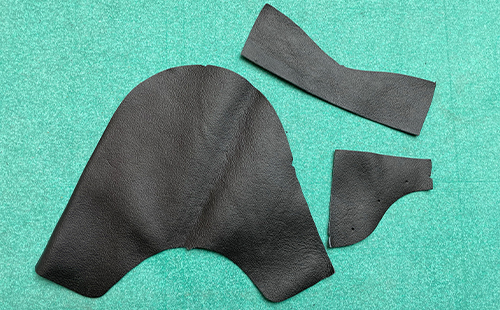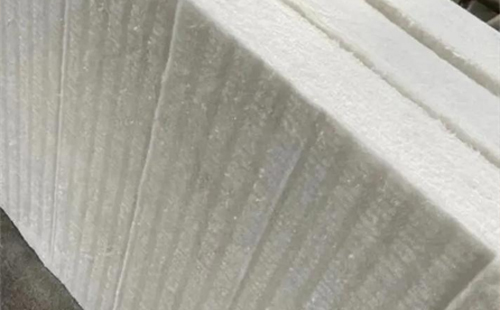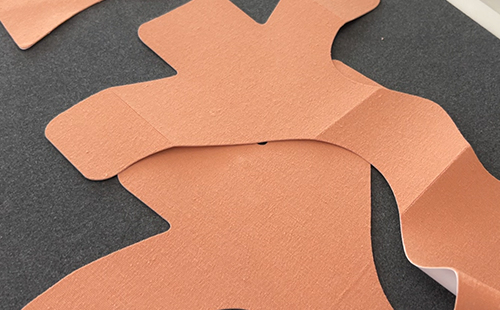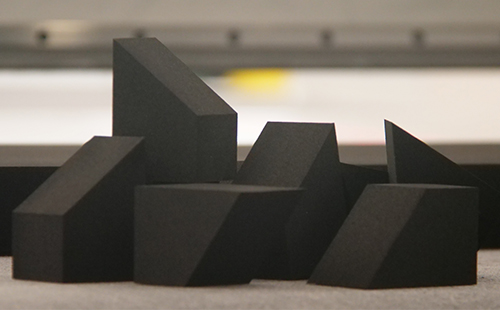
Rubber insulation cotton is a typical closed-cell elastic foam material, extensively applied in HVAC pipeline insulation, mechanical equipment heat preservation, computer room noise reduction, and air conditioning system wrapping. It features excellent flexibility and resilience, available in both sheet and roll forms. However, processing factories frequently encounter various production problems during cutting, including extrusion deformation, rough notches, edge scorching, unstable dimensional accuracy, and excessive material loss. Traditional cutting processes can no longer meet the market demand for multi-specification and personalized custom insulation parts, showing obvious technical limitations.
Pain Points of Traditional Rubber Insulation Cotton Cutting Methods
1. Manual Cutting
Manual cutting relies on utility knives and fixed templates, highly dependent on workers’ operational experience. Due to the strong elasticity and resilience of rubber insulation cotton, the material is easily squeezed and deformed during cutting, resulting in dimensional deviations of 2-3mm after rebound and uneven notches, which require secondary edge trimming. This processing method has extremely low efficiency, failing to support mass order production while raising labor costs year by year. In addition, it is difficult to process special-shaped parts such as arcs, holes, and elbow accessories, restricting the reception of multi-variety customized orders. The manual marking and cutting mode cannot optimize nesting layout, generating abundant leftover materials and serious waste.
2. Laser Thermal Cutting
Laser cutting is a thermal processing technology that melts materials through high-temperature laser beams. As a polymer foam material, rubber insulation cotton is extremely sensitive to high temperatures. Laser cutting will burn the cutting edge, causing yellowing, hardening, and scorching, which destroys the original closed-cell structure of the material and seriously reduces thermal insulation and sealing performance. Moreover, the thermal cutting process produces pungent flue gas, polluting the workshop production environment and requiring additional waste gas treatment equipment. For thick rubber insulation cotton, laser cutting speed is slow with unavoidable thermal damage, making the finished products unable to meet high-end assembly quality standards.
3. Die Stamping Cutting
Die stamping is only suitable for mass production of single-specification products. Each new special-shaped product requires customized die opening, with long production cycles and high mold costs, leading to heavy cost pressure for small-batch and multi-category orders. The stamping process relies on mechanical pressure for extrusion cutting; the resilience of rubber insulation cotton easily causes dimensional offset, and thick materials are prone to compression collapse and rough cross-sections. Frequent mold replacement is cumbersome and severely limits production flexibility.
CNC Oscillating Knife Cutting Machine: Optimal Cold Cutting Solution for Rubber Insulation Cotton
A professional CNC oscillating knife cutting machine is specially developed for flexible and elastic foam materials. Adopting pure physical high-frequency vibration cold cutting technology, it completely avoids thermal damage from laser processing and dimensional errors from manual and die cutting, perfectly matching the cutting characteristics of rubber insulation cotton that is easy to deform and heat-sensitive.
1. Pure Cold Cutting, Zero Edge Scorching, Complete Material Performance
The equipment uses tungsten steel blades for physical vibration cutting without high-temperature heating. The cutting process produces no smoke, no burnt edges, no hardening or yellowing of the material edge. It completely retains the closed-cell foam structure of rubber insulation cotton, ensuring stable thermal insulation, shock absorption and sealing performance of finished products. The flat and smooth cutting surface eliminates the need for secondary trimming, saving manual processing procedures.
2. Vacuum Adsorption Fixing, Deformation-Free & High Dimensional Accuracy
Equipped with a high-power vacuum adsorption platform, the machine firmly fixes sheet and roll rubber insulation cotton during processing, effectively suppressing material extrusion and rebound displacement. Imported servo drive systems and precision guide rails ensure a cutting accuracy of ±0.1mm, realizing consistent dimensional accuracy for batch production. It can easily complete complex special-shaped cutting such as arcs, openings, and diagonal cuts, covering all processing requirements of pipeline insulation special-shaped accessories.
3. Automatic Feeding System, Supporting Continuous Mass Production
Configured with an automatic conveyor feeding mechanism, the equipment realizes automatic unwinding, conveying and continuous cutting of roll rubber insulation cotton. It eliminates frequent manual loading and unloading, greatly improving production continuity and output efficiency, and effectively solving the problem of insufficient capacity for large orders.
4. Multi-Layer Cutting & Intelligent Nesting, Greatly Reducing Costs
The machine supports multi-layer overlapping cutting under reasonable working conditions, doubling production efficiency and replacing 4-6 manual workers, significantly reducing labor costs. The built-in intelligent nesting software automatically optimizes cutting paths and material layout, improving material utilization by more than 15% and reducing long-term material waste costs.
5. Mold-Free Flexible Processing, Adaptable to Custom Orders
Different from traditional die cutting, the CNC oscillating knife cutter realizes production by directly importing CAD design drawings. Drawing modification can complete sample proofing and mass production immediately, with no need for customized molds. It perfectly adapts to small-batch, multi-specification and mixed customized orders, greatly improving order reception capacity and market competitiveness.
Professional After-Sales & Service Support
Free trial cutting service is provided for rubber insulation cotton of different thicknesses and forms, allowing customers to check actual cutting effects intuitively. Complete equipment operation training is supported, enabling novice workers to operate proficiently in a short time. A sound after-sales guarantee system eliminates equipment use worries for global purchasers.