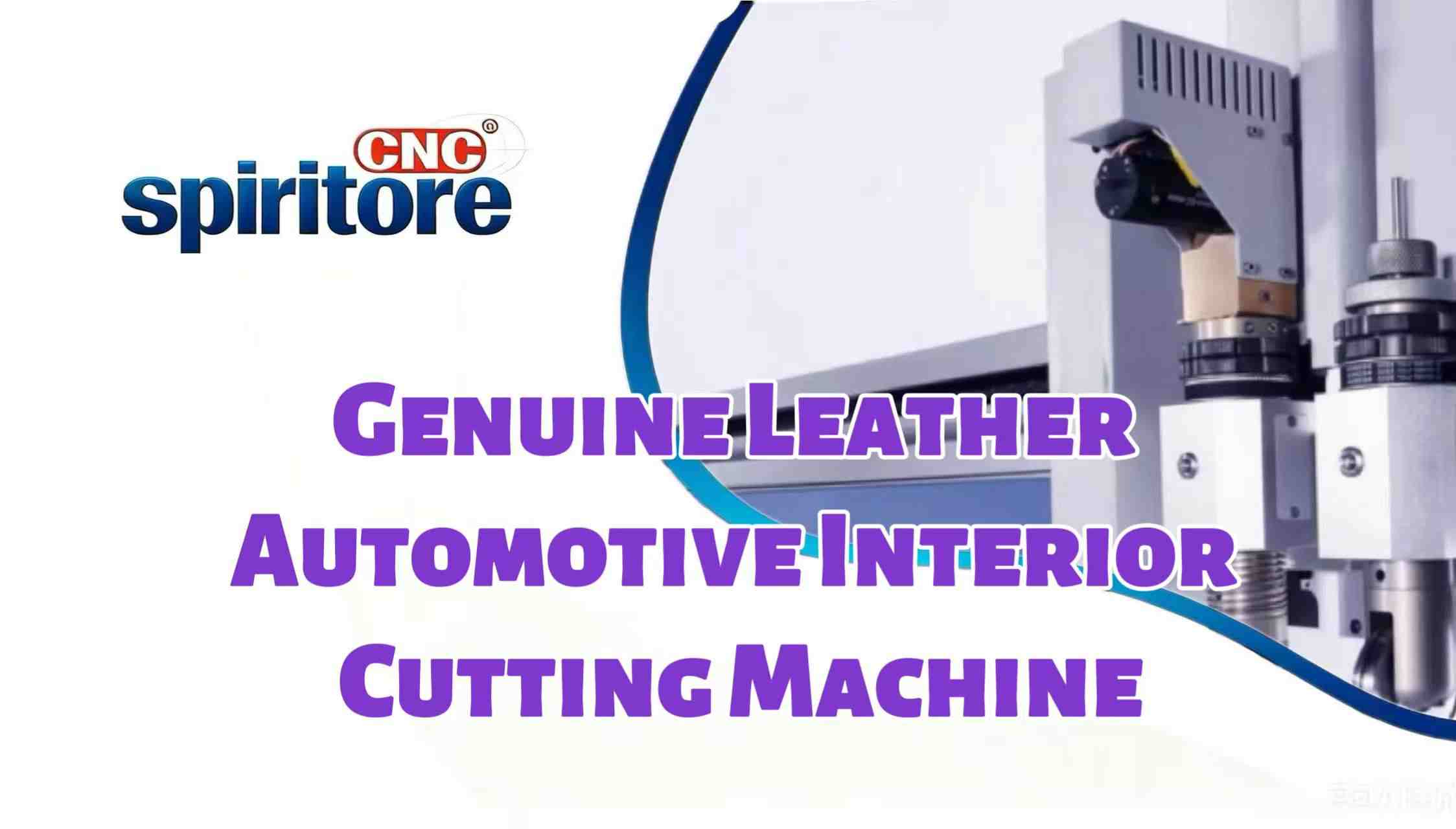
Premium full-surround car floor mats made of genuine leather, microfiber composite and shock-absorbing foam are mainstream high-margin products for auto interior factories. Many manufacturers still stick to manual cutting and hydraulic die stamping, while some switch to laser equipment only to encounter material damage, high raw material waste and low production speed. This article comprehensively contrasts traditional mat cutting techniques and professional CNC vibrating knife cutting machines matched with dedicated auto mat design software, covering core industry pain points, unique cutting advantages, full applicable material catalog and physical performance of mainstream car interior raw materials.
Core Pain Points of Traditional Car Mat Cutting
First, hydraulic mold cutting brings continuous extra expenditure on steel dies. Each car model, customized pattern and mat contour requires independent cutting molds. Small batch personalized orders generate repeated mold production fees and waiting cycles of several days. Factories storing hundreds of molds also occupy massive warehouse space, raising comprehensive operating costs.
Second, manual layout leads to severe leather waste and compressed profit space. Workers rely purely on personal experience to arrange leather rolls without scientific path optimization. High-cost genuine leather and microfiber materials produce large leftover scraps, and material utilization rate stays at a low level, greatly reducing profit for premium mat products.
Third, low production efficiency cannot satisfy bulk auto interior orders. Manual trimming and single-layer die cutting can only process a small number of mats per hour. Long delivery cycles easily lead to order loss, and factory capacity expansion requires recruiting dozens of skilled cutting workers with rising labor expenses year by year.
Fourth, laser thermal cutting permanently destroys leather surface texture and printed patterns. High laser temperature melts leather grain, fades surface printing and creates hard burnt edges. Foam inner liners will collapse and lose shock absorption performance after thermal cutting, making finished mats fail premium quality standards and triggering customer returns. Laser processing also releases toxic smoke that fails environmental inspection standards.
Fifth, unstable material fixation causes inconsistent finished mat size. Traditional cutting tables lack full vacuum adsorption. Soft leather, thin microfiber and elastic foam shift and wrinkle under cutting force, resulting in uneven outlines, poor edge smoothness and low finished product qualification rate, increasing heavy rework workload.
Sixth, single-material limitation restricts diversified product development. Separate equipment is needed for leather, microfiber and foam respectively under traditional processing modes. Factories need to invest multiple cutting machines to produce multi-layer composite car mats, raising equipment procurement and maintenance costs.
Traditional Cutting VS Vibrating Knife Cutter: Core Competitive Advantages
- Intelligent nesting system significantly saves high-value leather raw materialsEquipped with exclusive auto mat nesting algorithm matching professional mat design CAD software, the machine automatically optimizes the arrangement of mat parts on leather and microfiber rolls. Compared with manual layout, raw material utilization improves by more than 5%, cutting long-term high-cost leather consumption for mass premium mat production and directly lifting product profit margins.
- One machine processes all mainstream car mat composite materialsThe adjustable high-frequency vibration blade adapts to genuine leather, microfiber synthetic leather, shock-absorbing foam and multi-layer bonded composite mats in one single device. Factories no longer need to purchase separate cutting equipment for different substrates, reducing one-time equipment investment and daily maintenance labor.
- Dieless digital cutting shortens sample development and order deliveryOperators directly import car model mat drawings into the supporting cutting system without customized steel molds. Switching different vehicle styles and custom patterns takes less than one minute, eliminating mold manufacturing fees and waiting cycles. Small-batch customized mat orders can be responded to rapidly to expand customer sources.
- Cold physical vibration cutting fully retains premium material textureNo high temperature is generated during cutting. Leather natural grain, surface printed decorative patterns and foam shock-absorbing porous structure stay intact without melting, fading or burnt edges. All cut mat edges are smooth and burr-free without secondary trimming, meeting high appearance requirements of luxury car interior accessories.
- 5 times higher production efficiency than conventional cutting modesMulti-layer synchronous stacking cutting function allows simultaneous processing of multiple leather and foam layers within one operation. Under identical working hours, hourly finished mat output is more than five times that of manual and single-layer die cutting. Factories can rapidly fulfill large-volume auto interior bulk orders and greatly shorten delivery lead times.
- Full-surface vacuum adsorption table eliminates material shifting deformationWhole-table negative pressure vacuum tightly locks soft leather, thin microfiber and elastic foam during cutting. Materials cannot stretch, wrinkle or slide under blade vibration force. Cutting accuracy reaches ±0.1mm, all finished full-surround mats maintain unified size and perfect splicing effect, drastically lowering defective product rate and rework cost.
- Automated operation greatly reduces labor dependenceOne set of vibrating knife cutting equipment can replace 4 to 7 skilled mat cutting workers. Only one ordinary operator is required to complete feeding, software parameter adjustment and equipment monitoring, effectively solving the industry’s pain of hard recruitment and expensive labor for auto interior processing factories.
- Eco-friendly low-noise processing meets global factory environmental standardsDifferent from laser thermal cutting, cold vibration cutting generates no toxic smoke, melted leather residues or irritating odor. Low running noise avoids noise pollution in the workshop, eliminating extra exhaust treatment equipment investment and smoothly passing environmental audits.
Complete List of Applicable Car Floor Mat Cutting Materials
The auto mat dedicated vibrating knife cutter supports all mainstream raw materials used for manufacturing high-end full-surround car floor mats, covering single-layer decorative surface materials and multi-layer shock-absorbing composite blanks. The full material range includes genuine cowhide leather, microfiber synthetic leather, printed decorative leather, PVC composite leather, XPE shock-absorbing foam, EVA buffer foam, latex anti-slip underlay, multi-layer leather-foam bonded composite mat, knitted textile lining, wear-resistant carpet fabric, elastic waterproof membrane and flannel surface mat materials.
Physical Characteristics of Main Car Mat Materials & Matching Cutting Performance
- Genuine cowhide leatherPhysical features: Dense natural collagen fiber structure, uneven surface grain, thin printed decorative coating on partial leather; heat-sensitive coating easy to melt and fade under high temperature thermal cutting, soft texture prone to stretch without vacuum fixation.Cutting matching: Low-amplitude gentle cold vibration separates leather fibers without scratching surface grain and printed patterns; vacuum adsorption prevents leather stretching deformation, cutting edges stay neat without loose leather fibers.
- Microfiber synthetic leatherPhysical features: Three-dimensional interwoven microfiber skeleton filled with PU resin, uniform surface matte texture, thin wear-resistant top layer; easy to produce frayed edges under uneven cutting force, thermal cutting hardens fiber ends.Cutting matching: Balanced vibration force cleanly cuts microfiber layers without surface fraying; cold cutting retains soft touch of microfiber without hard burnt edges, no secondary edge sealing needed.
- XPE & EVA shock-absorbing foam inner linerPhysical features: Porous elastic internal structure, soft buffer performance, easy to collapse and lose shock absorption after high-temperature melting; thick foam prone to indentation under strong extrusion pressure.Cutting matching: Adjustable light vibration pressure avoids foam compression collapse; multi-layer stacked cutting keeps uniform thickness for all foam liners, intact porous shock-absorbing structure after processing.
- Multi-layer leather-foam composite matPhysical features: Decorative leather surface bonded with foam buffer underlayer, inconsistent hardness between leather and foam layers; easy layer separation under unstable cutting force.Cutting matching: Controllable cutting depth locks composite layers tightly during vibration cutting, no delamination, dislocation or separation between surface leather and foam liner.
- Wear-resistant carpet & flannel mat surface fabricPhysical features: Dense woven fiber structure, loose surface fluff easy to shed under pulling force; thermal cutting melts fiber ends to form hard burrs, destroying soft foot feel.Cutting matching: Soft low-frequency vibration gently separates carpet fibers without pulling surface fluff; cold cutting maintains complete fluffy texture of finished car mats.
In summary, CNC vibrating knife cutting machines matched with professional auto mat design software solve all core drawbacks of traditional car mat cutting from raw material saving, multi-material compatibility, production efficiency, finished product quality and labor cost dimensions. For auto interior manufacturers focusing on high-end customized full-surround floor mats, intelligent vibrating knife cutting equipment is an irreplaceable production upgrade solution to boost profits and delivery capacity.