Custom floor mats, entrance doormats and automotive floor liners are mainstream products for household supplies and auto interior industries. Most mat processing factories still rely on three traditional cutting modes: manual cutting with utility knives, fixed metal die cutting and laser thermal cutting. These outdated processing technologies bring persistent production troubles such as uneven cutting outlines, frayed mat edges, expensive custom molds and low efficiency for small-batch customized orders. This article sorts out universal core pain points of traditional mat cutting processes, compares performance gaps with CNC large vision vibrating knife cold cutting equipment, lists all mainstream mat raw materials, and elaborates each material’s physical characteristics and matched cutting logic.
Core Industry Pain Points of Traditional Mat Cutting Processes
Manual cutting is the primary low-cost processing method adopted by small mat workshops. Workers trace mat outlines by hand according to paper templates, and cutting accuracy completely depends on operator experience. Elastic PVC coil mats, soft rubber mats and thick foam mats are easy to stretch and shift during manual pushing cutting, resulting in irregular curved edges, incomplete contour cutting and inconsistent mat sizes. Complex printed pattern mats require repeated trimming and polishing, which greatly extends sample development and batch production cycles. Training skilled cutting workers brings long-term fixed labor expenditure, and frequent human errors lead to high defective rates of finished mats.
Fixed metal die cutting is only suitable for mass production of single fixed mat styles, unable to adapt to the fast iteration demand of personalized customized orders. Every new mat shape or printed pattern needs customized metal cutting dies, with long mold opening cycle and high manufacturing cost. Once customers adjust mat sizes or graphic designs, original molds are completely scrapped, causing double waste of capital and mat raw materials. Mechanical stamping extrusion easily squeezes thick composite mats to produce indentation, layering and internal separation, and the coil structure of PVC wire mats will be crushed and deformed, seriously affecting anti-slip and dust storage performance.
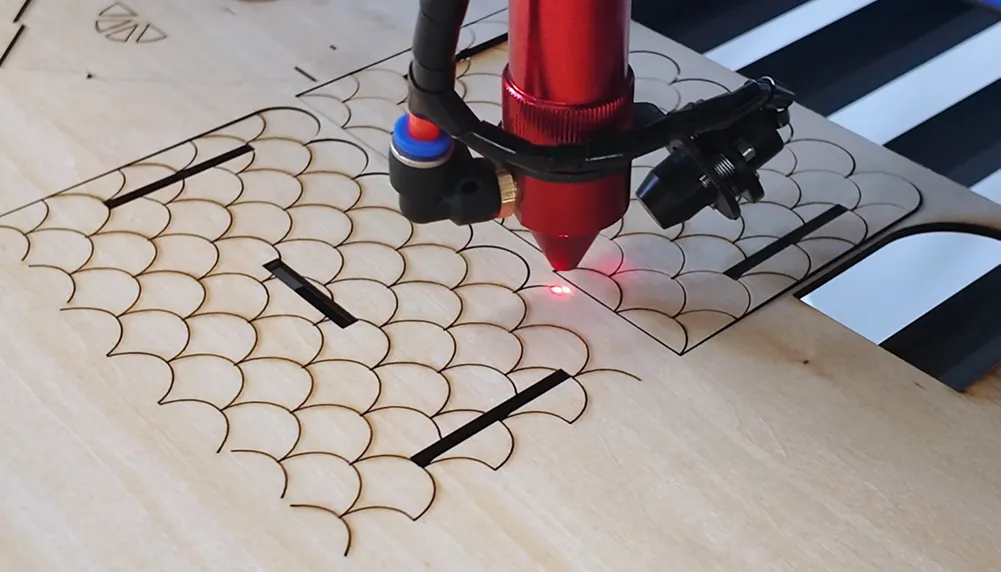
Laser thermal cutting uses high-temperature light beams to melt mat raw materials. PVC, rubber and foam mats will melt and carbonize under high heat, forming hard black scorch edges that damage the soft texture and anti-slip function of mats. Melting plastic and rubber releases irritating toxic smoke, polluting the workshop environment and bringing environmental inspection risks. Thermal deformation leads to inconsistent cutting dimensions, and intricate hollow decorative patterns on printed mats cannot be formed neatly, with a high finished product rejection rate.
All traditional mat cutting modes have severe raw material waste problems. Random manual layout and fixed mold layout cannot maximize mat sheet utilization rate, and leftover mat scraps cannot be recycled for secondary processing. Frequent mold replacement, repeated manual proofing and secondary trimming delay order delivery speed, making factories lose high-value customized small-batch customers easily.
Traditional Cutting VS CNC Vibrating Knife Cutting: Exclusive Advantages for Mat Processing
Different from manual extrusion cutting, die stamping and laser thermal melting, CNC vibrating knife cutting machine adopts pure physical cold high-frequency vibration cutting technology, equipped with large-format CCD vision automatic edge patrol recognition system and vacuum adsorption workbench. It fundamentally solves all core pain points of mat cutting and forms multiple exclusive competitive advantages for household and automotive mat production.
First, large vision automatic contour identification, ultra-high consistent cutting precision. The built-in large-area industrial camera automatically scans printed patterns and outline marks on mats, realizing automatic positioning and edge patrol without manual alignment. The vacuum adsorption platform tightly fixes elastic, thick and coil-structured mats to prevent stretching and displacement during slicing, with cutting error controlled within ±0.08mm. High-frequency micro-vibration cleanly cuts PVC coils, rubber and foam layers without crushing or pulling materials, cutting edges remain smooth without burrs, ensuring uniform size of all finished mats from the same batch, perfectly matching the high-standard customization demand of household and automotive interior mats.
Second, zero mold investment, intelligent automatic nesting and greatly improved production efficiency. Built-in AI intelligent nesting software automatically optimizes mat layout paths to maximize raw material utilization. No metal cutting molds are required for any new mat pattern; users only need to import DXF, AI, PDF design files into the control system, and the machine can start automatic continuous cutting within one minute. One vibrating knife cutter can replace 4 to 6 manual cutting workers, and processing efficiency is increased by over 85% compared with die and laser cutting. The visualized touch operation panel supports one-click parameter adjustment, and new operators can master full cutting, half-cut and punching operations within half an hour without professional design background.
Third, eco-friendly cold cutting, zero thermal damage to mat materials. The whole cutting process generates no high temperature, toxic smoke or peculiar smell, and will not cause melting, carbonization or hardening of PVC, rubber and foam mats. The original soft anti-slip texture and coil structure of mats are completely retained, without losing dust storage and waterproof performance. No waste gas treatment equipment needs to be equipped in the workshop, fully complying with global environmental protection production standards.
Fourth, multi interchangeable tool heads and ultra-wide mat material compatibility. Single machine is equipped with thin mat precision vibrating knife, thick foam mat cutting knife, coil mat special cutting knife and perforating tool. Operators can switch tool heads according to mat thickness, hardness and internal structure, completing full cutting, dot punching and grooving processing at one time, covering almost all soft and semi-rigid raw materials used in household door mat and automotive floor mat manufacturing.
Complete List of Applicable Mat Raw Materials for Vibrating Knife Cutters
PVC series mat materials: PVC coil wire mat, PVC soft coil mat, PVC printed floor mat, PVC anti-slip composite mat, PVC transparent mat roll.
Rubber mat materials: natural rubber door mat, nitrile rubber floor mat, thick rubber automotive mat, foam rubber composite mat, anti-fatigue rubber mat.
Foam buffer mat materials: EVA foam mat, XPE pearl cotton mat, XPS insulation foam mat, PU sponge composite mat, high-density foam car trunk mat.
Fabric & composite mat materials: polyester carpet mat, needle felt mat, flannel printed mat, leather composite mat, non-woven anti-slip mat.
Auxiliary matching materials: KT board, corrugated cardboard, honeycomb board, silicone sheet, TPU film, double-sided foam adhesive.
Physical Characteristics of Main Mat Materials & Matching Cutting Logic
PVC coil wire mat: Intertwined spiral PVC wire structure, elastic and easy to be crushed by extrusion force. Low-pressure high-frequency vibration cutting separates coil wires completely without collapse, vacuum adsorption locks mat flat to avoid warping, cold cutting retains original dust trapping performance without scorch marks.
Solid rubber mat: Medium hardness, dense elastic structure, heat-sensitive, laser high temperature will melt and harden the surface. Cold vibration slicing keeps mat surface smooth, no black burnt edges, intact anti-slip texture.
EVA foam mat: Light porous foamed structure, soft and prone to stretch rebound deformation. Constant negative pressure vacuum table fixes foam firmly, flat cutting edges without shrinkage or curling.
Printed carpet felt mat: Loose fiber structure, easy to produce floating fiber debris during manual cutting. Micro-vibration cleanly separates fiber layers without scattered fluff, no secondary trimming required.
Thick composite automotive mat: Multi-layer composite structure of rubber base + foam buffer, easy to delaminate under stamping pressure. Adjustable vibration pressure evenly cuts through each layer without internal separation, no thermal damage to surface printing patterns.
Conclusion
Manual cutting, fixed die stamping and laser thermal cutting cannot balance cutting precision, customization flexibility, production efficiency and environmental protection in modern customized floor mat and automotive mat manufacturing. CNC large vision vibrating knife cold cutting equipment relies on large-format CCD visual automatic edge patrol and digital high-frequency vibration cutting technology to thoroughly eliminate industry pain points such as irregular outlines, frayed edges, high mold cost and serious material waste. It supports integrated processing of dozens of mainstream PVC, rubber, foam and fabric mat materials, with simple one-click operation, stable finished product quality and ultra-fast pattern switching capacity, becoming the preferred cutting equipment for household mat factories, automotive interior mat manufacturers and custom gift mat suppliers. If you need cutting equipment matched with your mat thickness, pattern types and daily output, send your production demands to us for one-to-one professional selection consultation and customized processing solution recommendation.